

An Initial Public Offering (IPO) in India is the process through which a privately held company offers its shares to the public for the first time. It’s a significant milestone for any company and provides a chance for individual and institutional investors to buy shares in what could potentially be the next big growth story. Investing in an Indian IPO is an exciting opportunity, but it comes with its own set of risks and rewards. In this comprehensive guide, we’ll walk you through everything you need to know about IPOs in India, including how to invest in them, the process, and key factors to consider.

What Is an IPO in India?
Definition and Purpose of IPOs in India
An IPO is the first time a company offers its shares to the general public. By issuing an IPO, a company can raise capital that can be used for expansion, reducing debt, or funding future projects. IPOs can also provide liquidity for early investors and employees, enabling them to sell their shares in the public market.
Why Do Companies Launch IPOs?

Companies choose to go public for various reasons, including:
- Raising Capital: Companies use the funds raised through an IPO for expansion, research and development, and to pay off existing debts.
- Increasing Market Visibility: Going public increases the company’s profile and market presence.
- Providing Liquidity: IPOs provide an exit route for early investors, venture capitalists, and employees.
- Attracting Top Talent: Being publicly listed can also help a company offer stock-based compensation to attract high-quality employees.
How Does the IPO Process Work in India?
Step 1: Appointment of Merchant Bankers and Underwriters
Before launching an IPO, the company appoints merchant bankers, investment banks, and underwriters to manage the IPO process. These entities help with pricing, marketing, and ensuring that the IPO adheres to the necessary regulations.
Step 2: Filing the Draft Red Herring Prospectus (DRHP)
The company files a DRHP with the Securities and Exchange Board of India (SEBI). This document contains key details about the company, its financial health, the purpose of the IPO, and potential risks involved. The DRHP must be approved by SEBI before the IPO can proceed.
Step 3: SEBI Review and Approval
Once the DRHP is filed, SEBI reviews it to ensure compliance with Indian securities laws. After approval, the company can proceed to the next steps.
Step 4: Marketing the IPO
The company and its underwriters will conduct a marketing campaign to generate interest in the IPO. This often includes roadshows and presentations to institutional investors and analysts.
Step 5: Pricing and Allotment
The company and its underwriters decide the price at which the shares will be offered. The shares are then allotted to investors who have applied for them.
Step 6: Listing on Stock Exchanges
Once the shares are allotted, they are listed on major Indian stock exchanges like the Bombay Stock Exchange (BSE) or the National Stock Exchange (NSE). After listing, investors can buy and sell shares of the company in the open market.
How to Invest in an Indian IPO?
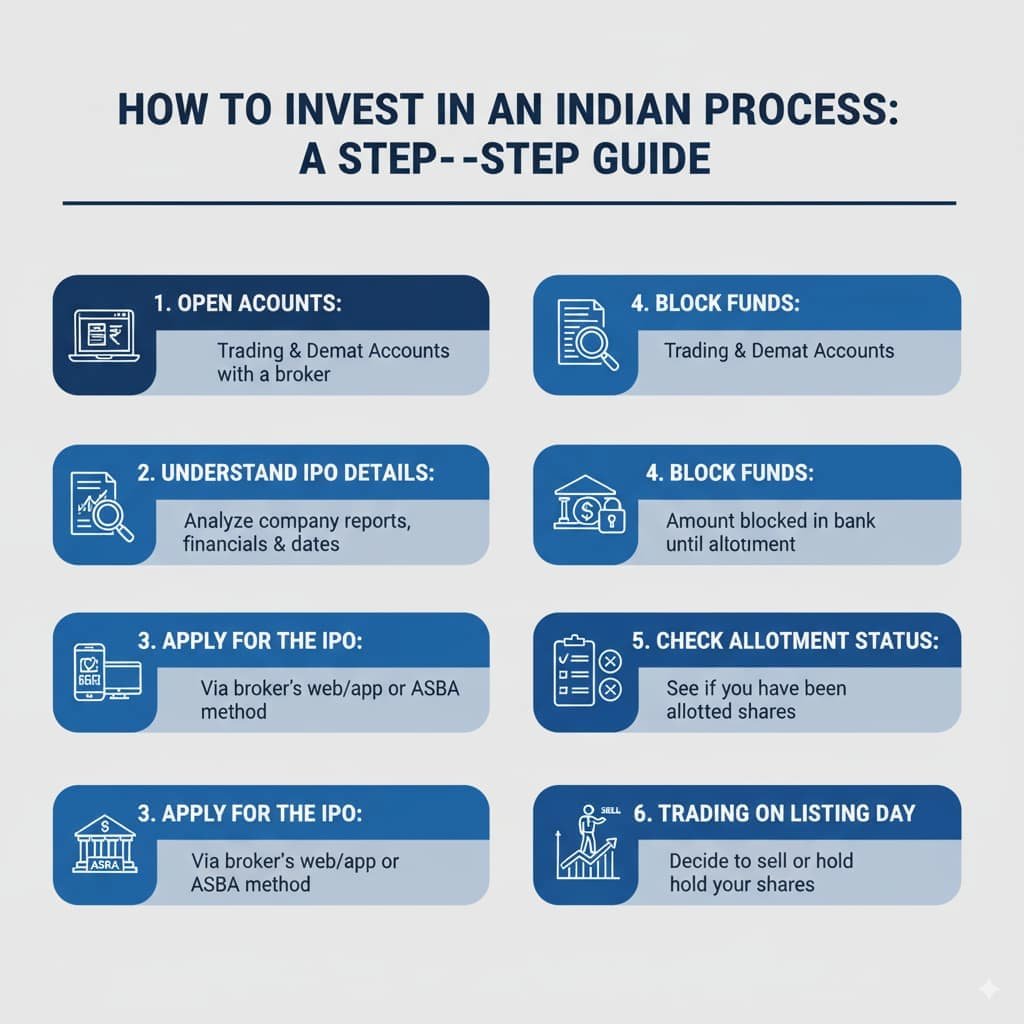
Step 1: Open a Trading and Demat Account
Before you can invest in an IPO, you need to have both a trading account and a Demat account with a SEBI-registered broker. The trading account allows you to place buy or sell orders, while the Demat account holds your shares in an electronic form.
Step 2: Understand the IPO Details
Carefully read the company’s DRHP and other prospectus documents. Understand the company’s financials, management team, growth prospects, and how the capital raised will be used.
Step 3: Apply for the IPO
You can apply for the IPO through multiple channels, such as:
- Brokers’ Websites and Apps: Most brokers offer an online platform for IPO applications.
- Bank ASBA: Applications Supported by Blocked Amount (ASBA) allow you to apply through your bank. The amount gets blocked in your account but is only debited if you are allotted shares.
Step 4: Block Funds
Once you’ve applied for the IPO, the funds are temporarily blocked in your bank account. If you’re allotted shares, the amount will be debited from your account; if not, the amount is released back to your account.
Step 5: Check Allotment Status
After the IPO allotment process, you can check if your application was successful and if shares were allotted to you. This can be done on the registrar’s website or through your broker.
Step 6: Trading on Listing Day
Once shares are allotted, they will be credited to your Demat account. On the listing day, you can choose to sell them or hold them for long-term investment.
FAQs:
1. What are the risks associated with investing in IPOs in India?
While IPOs can provide high returns, they also come with risks, including:
- Overvaluation: IPOs can sometimes be overpriced.
- Market Volatility: Stock prices can fluctuate dramatically on listing day.
- Lack of Performance History: Many IPOs don’t have a long track record, making it difficult to assess their future performance.
2. How can I assess if an IPO is worth investing in?
Here are a few things to look for:
- Financial Health: Check the company’s revenue, profits, and debt levels.
- Management Team: Look into the leadership and their track record.
- Growth Potential: Assess the company’s market share, industry growth, and future prospects.
- Pricing: Make sure the IPO is reasonably priced compared to competitors.
3. Can I apply for multiple IPOs at once?
Yes, you can apply for multiple IPOs, but ensure you have sufficient funds in your bank account to cover all applications.
4. Is it better to apply for an IPO via a broker or through ASBA?
Both options are valid, but applying via ASBA (through a bank) has its benefits in terms of ensuring that funds remain blocked and aren’t debited until allotment.
Conclusion
Investing in an Indian IPO presents an exciting opportunity to be part of a company’s journey from private to public. However, IPOs come with their risks and rewards. By understanding the IPO process and carefully evaluating the company’s prospects, you can make informed decisions that align with your investment goals. Always remember that IPO investments should be made with caution and after thorough research.