
Insurance is a fundamental financial tool designed to provide protection against potential risks and losses. In a rapidly changing world like India, where natural disasters, health emergencies, accidents, and other unforeseen events can cause significant financial strain, insurance provides a safety net. Whether it’s for your health, vehicle, or home, understanding the basics of insurance and its various types is crucial. This blog aims to simplify the concept of insurance, its importance, and the different types that cater to the diverse needs of the Indian population.
🛡️ What is Insurance?
Insurance is essentially a contract between the policyholder and an insurer, where the insurer agrees to provide financial compensation for specific losses in exchange for premium payments. The objective of insurance is to reduce the financial burden in case of accidents, illnesses, or damage to property. By pooling risk among a large group of people, insurance ensures that policyholders are not financially devastated by unexpected events.
Key Components of Insurance
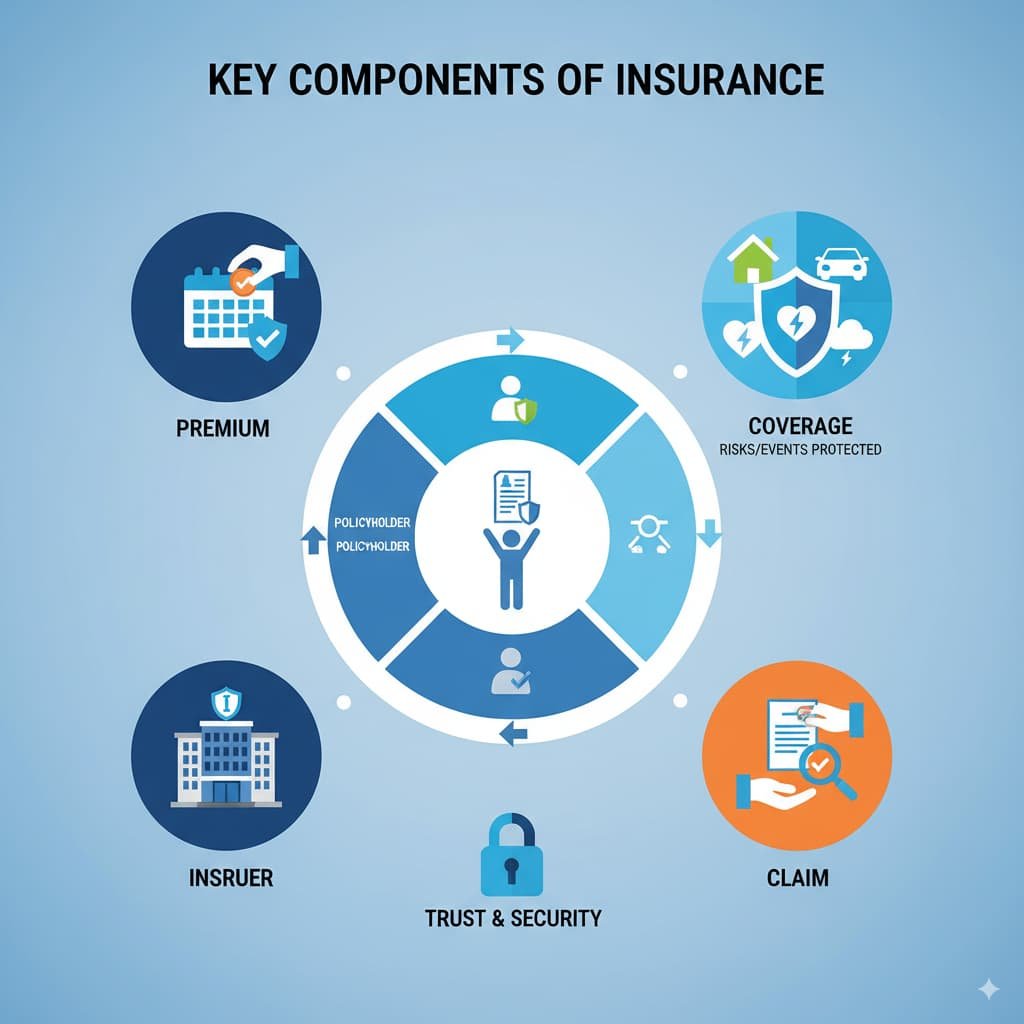
- Premium: The amount paid periodically by the policyholder to the insurer.
- Policyholder: The individual or business entity that purchases the insurance policy.
- Insurer: The company providing the insurance coverage.
- Coverage: The risks or events covered by the insurance policy.
- Claim: A request made by the policyholder for compensation after a loss or damage.
🔍 How Does Insurance Work?
Insurance works by spreading risk across many policyholders. When you purchase insurance, you pay a regular premium to the insurer. In return, the insurer provides financial protection against potential losses that could occur due to various risks like illness, accidents, or natural disasters. The funds pooled from all policyholders are used to compensate those who face the covered events.
For example, in health insurance, the insurer covers medical expenses, ensuring that individuals don’t face significant financial burdens during a health crisis. Similarly, in life insurance, the policyholder’s family receives a financial payout in the event of their death, ensuring their financial stability.
🧾 Types of Insurance
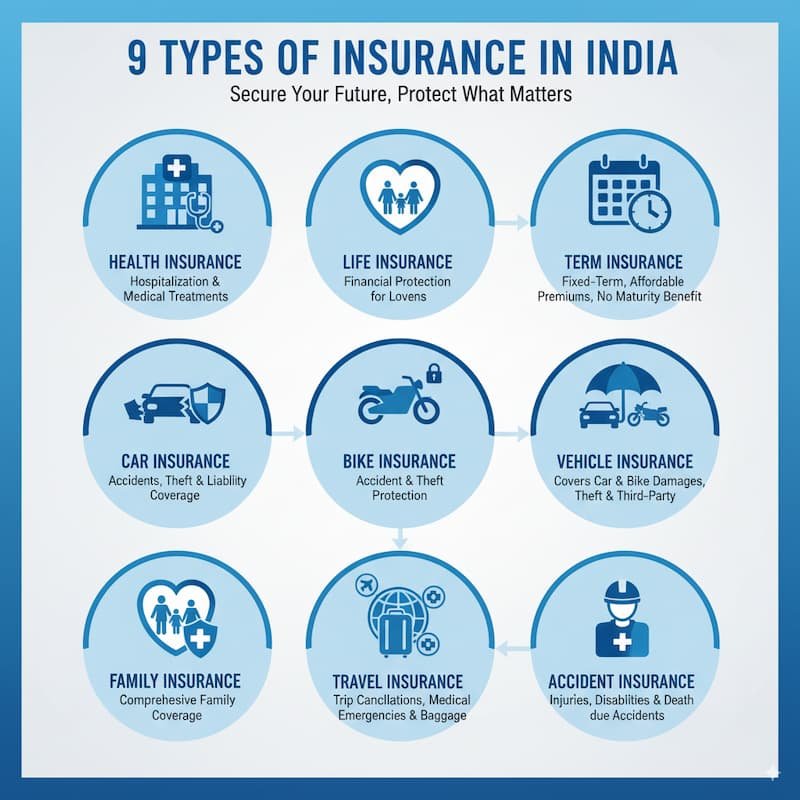
Insurance comes in various forms, each addressing different types of risks. Below are some of the most common types of insurance policies available in India:
1. Health Insurance
Health insurance provides coverage for medical expenses, including hospitalization, surgery, and outpatient treatments. Given the rising cost of healthcare in India, having a health insurance plan is essential for individuals and families to manage healthcare expenses without financial strain.
Key Features:
- Covers hospitalization, surgeries, and medical treatments.
- Cashless treatment options at network hospitals.
- Covers pre-existing conditions after a waiting period.
2. Life Insurance
Life insurance is designed to provide a financial safety net for the family or beneficiaries of the policyholder in the event of their death. It ensures that dependents are not left financially vulnerable after the policyholder’s demise.
Key Features:
- Provides financial security to loved ones in case of the policyholder’s death.
- Options include term life, whole life, and unit-linked insurance policies.
- Some policies offer investment options along with life coverage.
3. Term Insurance
Term insurance is a simple, affordable form of life insurance that provides coverage for a fixed term or period. In case of the policyholder’s death during the term, the beneficiary receives the sum assured. Term insurance does not accumulate any cash value but offers high coverage at low premiums.
Key Features:
- Affordable premiums with high coverage.
- No maturity benefits, but death benefits are paid to the beneficiary.
- Available for various terms (10, 20, 30 years, etc.).
4. Car Insurance
Car insurance protects against financial losses arising from accidents, theft, and damage to your vehicle. It is mandatory in India to have at least third-party car insurance, which covers liabilities for injuries or damages caused to others in case of an accident.
Key Features:
- Covers damages to the vehicle and third-party liabilities.
- Comprehensive policies offer broader protection, including natural calamities and theft.
- Optional add-ons like zero depreciation, roadside assistance, etc.
5. Bike Insurance
Bike insurance provides coverage for your motorcycle or scooter in case of accidents, theft, or damages caused by external factors. Given the high number of motorcycles in India, this type of insurance is essential for protecting one of the most common modes of transport.
Key Features:
- Covers damages to the bike and third-party liabilities.
- Available in third-party and comprehensive plans.
- Can include personal accident cover and theft protection.
6. Vehicle Insurance
Vehicle insurance is a broader category that includes both car and bike insurance. It protects against financial loss due to accidents, theft, natural disasters, and vandalism. Vehicle insurance is required by law in India for all motor vehicles.
Key Features:
- Covers damage to the vehicle and third-party property damage.
- Includes comprehensive coverage for fire, theft, and accidents.
- Mandatory by law to have at least third-party insurance.
7. Family Health Insurance
Family health insurance covers the medical expenses of the entire family, including the policyholder, spouse, children, and sometimes even extended family members like parents. It provides a cost-effective way to ensure that all family members are covered for health-related emergencies.
Key Features:
- Comprehensive coverage for all family members.
- Cashless hospitalization in network hospitals.
- Covers pre and post-hospitalization expenses.
8. Travel Insurance
Travel insurance provides protection during travel against unforeseen incidents such as trip cancellations, medical emergencies, lost baggage, or flight delays. It ensures that travelers are financially covered when they are away from home.
Key Features:
- Covers trip cancellations, medical emergencies, and lost luggage.
- Offers coverage for travel-related delays and accidents.
- Essential for international travel, ensuring protection abroad.
9. Accident Insurance
Accident insurance provides coverage for injuries, disability, or death caused by accidents. This type of insurance is ideal for individuals who want to secure their financial future in case of accidents that may lead to permanent disability or death.
Key Features:
- Provides compensation for injuries or death caused by accidents.
- Offers lump-sum benefits in case of disability.
- Can be purchased as standalone coverage or as part of a comprehensive insurance policy.
10. Critical Illness Insurance
Critical illness insurance covers the cost of treatment for serious health conditions such as cancer, heart attack, stroke, kidney failure, etc. It offers a lump sum payout upon diagnosis, helping to manage the high treatment costs.
Key Features:
- Covers major illnesses with high medical costs.
- Provides a lump sum payout upon diagnosis of a covered illness.
- Helps reduce financial stress during a prolonged illness.
11. Business Insurance
Business insurance is designed to protect businesses against risks such as property damage, liability claims, and employee-related risks. It can include property insurance, liability insurance, and workers’ compensation coverage, ensuring that businesses continue to operate smoothly after setbacks.
Key Features:
- Covers business property, employees, and operations.
- Protects against liabilities and legal fees.
- Offers coverage for natural disasters, theft, and vandalism.
12. Farm Insurance
Farm insurance provides protection for agricultural activities, including crop failure, livestock accidents, and damage to farming equipment. In India, where agriculture plays a vital role in the economy, farm insurance ensures that farmers are protected against unpredictable events.
Key Features:
- Covers crop damage caused by floods, drought, pests, etc.
- Protects livestock and agricultural equipment.
- Provides compensation for farming-related losses.
📈 Importance of Insurance
1. Financial Protection
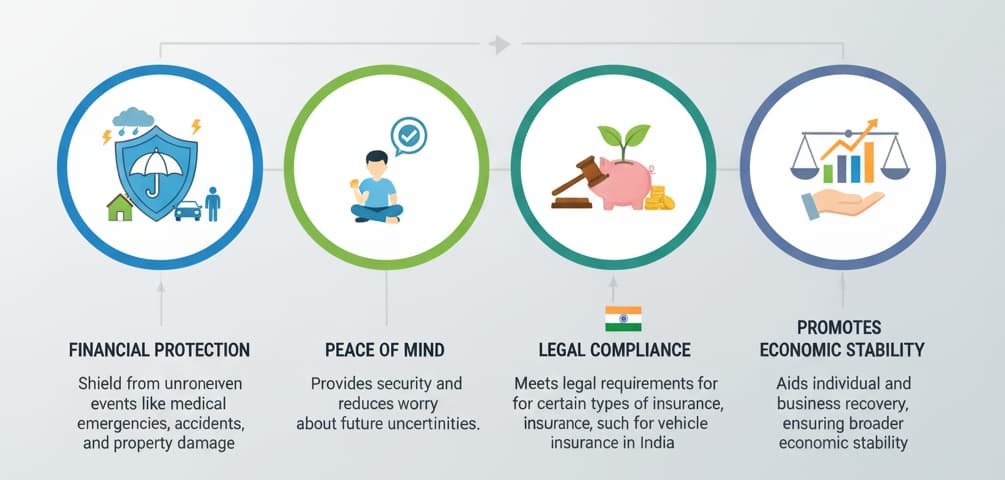
Insurance offers financial protection against unforeseen events. Whether it’s a medical emergency, an accident, or property damage, insurance helps policyholders avoid bearing the full financial burden.
2. Peace of Mind
Having insurance brings peace of mind, knowing that you’re financially protected in case of emergencies. It reduces stress during difficult situations, allowing individuals to focus on recovery.
3. Legal Compliance
Certain types of insurance, such as vehicle insurance, are mandatory by law in India. Ensuring compliance with these legal requirements helps avoid penalties and legal issues.
4. Encourages Savings
Some insurance policies, such as endowment and ULIPs, combine investment with coverage. This not only provides protection but also allows policyholders to accumulate savings or wealth over time.
5. Promotes Economic Stability
Insurance contributes to economic stability by helping individuals and businesses recover quickly after setbacks, preventing larger economic disruptions.
🧭 Choosing the Right Insurance
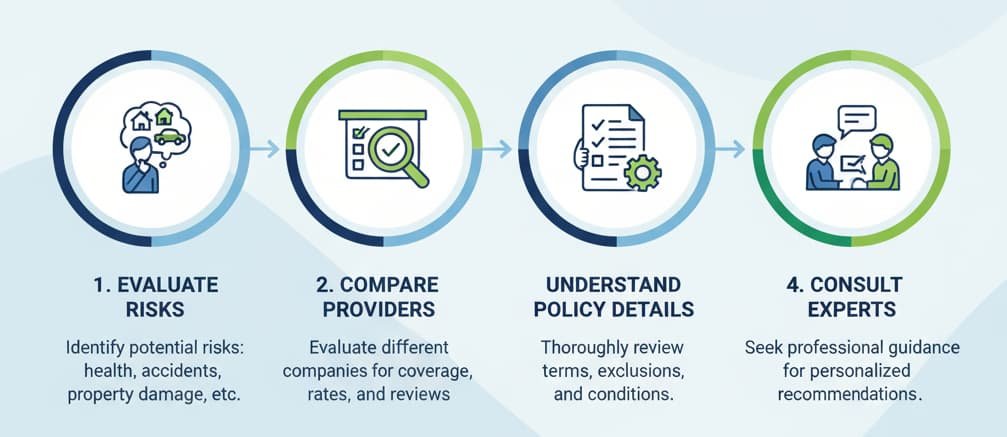
To choose the right insurance, assess your needs carefully and evaluate the available options:
- Evaluate Risks: Understand the types of risks you face, such as health problems, accidents, or property damage, and select insurance policies accordingly.
- Compare Providers: Evaluate policies from different insurers to find the best coverage at competitive rates.
- Understand Policy Details: Read the policy terms, exclusions, and conditions carefully.
- Consult Experts: Seek advice from insurance agents or financial planners for tailored recommendations.
📝 Conclusion
Insurance plays an integral role in securing your financial future and providing protection against life’s uncertainties. Whether it’s health, vehicle, life, or property insurance, having adequate coverage ensures that you’re not financially overwhelmed by unexpected events. In India, where risks such as natural disasters, health issues, and accidents are prevalent, insurance is not just advisable—it’s essential. Make informed choices and ensure your financial security with the right insurance policy.