

Investing can often seem daunting, especially for beginners. However, mutual funds offer a straightforward and accessible way for Indian investors to grow their wealth. By pooling money with other investors, mutual funds provide access to a diversified portfolio managed by professionals. This guide aims to demystify mutual funds, highlighting their benefits, types, and how you can start investing today.

Understanding Mutual Funds
A mutual fund is an investment vehicle that collects money from multiple investors to invest in a diversified portfolio of assets such as stocks, bonds, or money market instruments. These funds are managed by professional fund managers who make investment decisions on behalf of the investors.
How Mutual Funds Work
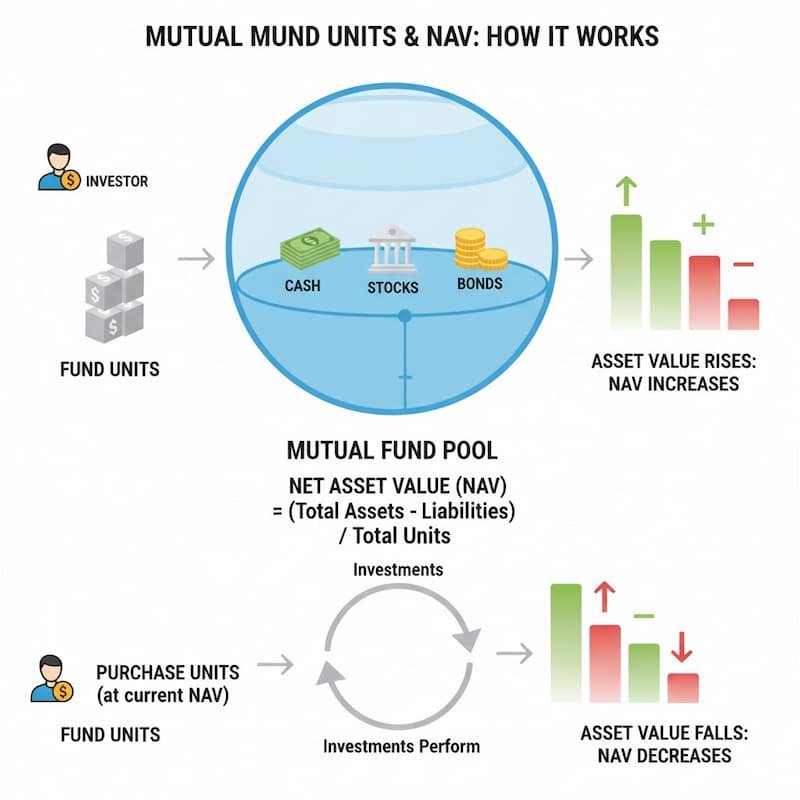
When you invest in a mutual fund, you purchase units of the fund at the prevailing Net Asset Value (NAV). The NAV reflects the total value of the fund’s assets minus liabilities, divided by the number of outstanding units. The value of your investment fluctuates based on the performance of the underlying assets.
Types of Mutual Funds
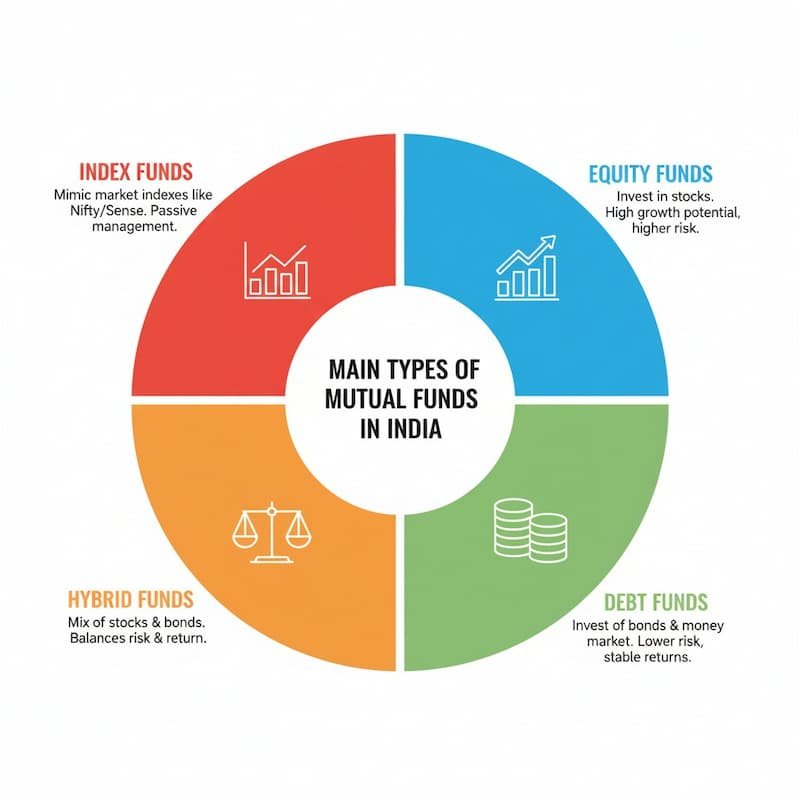
Mutual funds in India are broadly categorized based on their investment objectives and asset allocation:
- Equity Funds: Invest primarily in stocks, aiming for long-term capital appreciation. Suitable for investors with a higher risk tolerance.
- Debt Funds: Invest in fixed-income securities like bonds, offering regular income with relatively lower risk.
- Hybrid Funds: Combine equity and debt instruments to balance risk and return.
- Index Funds: Aim to replicate the performance of a specific market index, offering broad market exposure at a lower cost.
Benefits of Investing in Mutual Funds
Investing in mutual funds offers several advantages:
- Diversification: By investing in a variety of assets, mutual funds reduce the risk associated with individual securities.
- Professional Management: Experienced fund managers make informed investment decisions on your behalf.
- Liquidity: Mutual funds offer easy redemption of units, providing flexibility to investors.
- Affordability: Many mutual funds allow investments with as little as ₹500, making them accessible to a wide range of investors.
- Tax Benefits: Certain mutual funds, like Equity Linked Savings Schemes (ELSS), offer tax deductions under Section 80C of the Income Tax Act.

How to Invest in Mutual Funds
Investing in mutual funds is simple and can be done through various channels:
- Direct Investment: Invest directly through the Asset Management Company (AMC) without intermediaries.
- Through Distributors: Use brokers or financial advisors who can assist in selecting suitable funds.
- Online Platforms: Utilize digital platforms and apps that offer a wide range of mutual fund options.
Steps to Start Investing
- Complete KYC: Know Your Customer (KYC) is mandatory for investing in mutual funds. This involves submitting identity and address proof.
- Choose a Fund: Based on your financial goals and risk appetite, select a mutual fund that aligns with your objectives.
- Decide Investment Mode: Choose between a lump sum investment or a Systematic Investment Plan (SIP), which allows you to invest a fixed amount regularly.
- Monitor Your Investment: Regularly review the performance of your investment to ensure it meets your expectations.

Commonly Used Keywords
- Systematic Investment Plan (SIP): A method of investing a fixed sum regularly in mutual funds.
- Net Asset Value (NAV): The per-unit value of a mutual fund, calculated by dividing the total value of assets by the number of outstanding units.
- Asset Management Company (AMC): A firm that manages mutual funds and other investment products.
- Equity Linked Savings Scheme (ELSS): A type of mutual fund that offers tax benefits under Section 80C.
Conclusion
Mutual funds present a viable investment option for individuals looking to grow their wealth without the complexities of direct stock market investments. By understanding the basics and aligning your investments with your financial goals, you can harness the potential of mutual funds to achieve financial success.