

Choosing the right mutual fund is essential for reaching your financial goals. Whether you are saving for retirement, your child’s education, or simply aiming to grow your wealth, selecting the correct mutual fund can significantly impact your financial future. With numerous options available, it’s important to assess your risk tolerance, investment horizon, and financial objectives. In this guide, we will help you understand how to select the best mutual fund in India for 2025.
🧭 Step-by-Step Guide to Choosing the Right Mutual Fund
1. Define Your Financial Goals
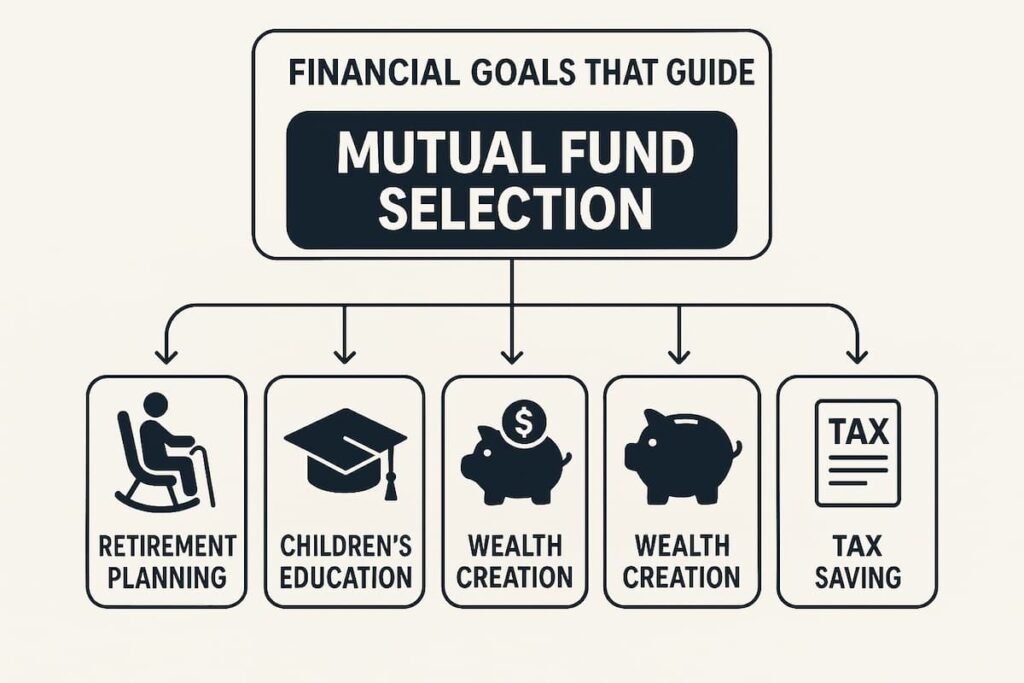
The first step in selecting the right mutual fund is to clearly define your financial objectives. Here are some common goals:
- Retirement Planning: Accumulating funds for your retirement years.
- Children’s Education: Building a corpus for your child’s future educational needs.
- Wealth Creation: Growing your savings over time for various purposes.
- Tax Saving: Investing in schemes that offer tax deductions under Section 80C.
Your goals will guide you in selecting the appropriate mutual fund category and will influence your risk tolerance and investment horizon.
2. Assess Your Risk Tolerance
Your risk tolerance is how much risk you are willing to take with your investments. This will help determine whether you choose higher-risk equity funds or lower-risk debt funds.
- High Risk: For aggressive investors seeking higher returns.
- Moderate Risk: For investors looking for a balanced approach to risk and return.
- Low Risk: For conservative investors looking to preserve capital.
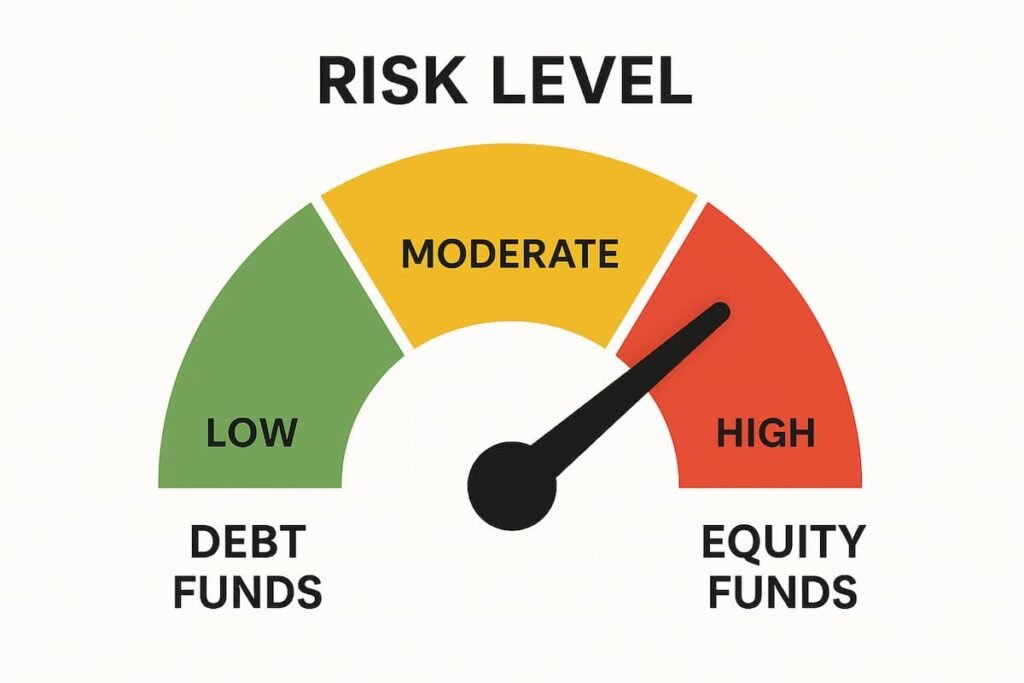
Understanding your risk tolerance is essential for selecting funds that align with your comfort level and long-term goals.
3. Determine Your Investment Horizon
Your investment horizon refers to the time period for which you plan to invest. This impacts the type of fund you choose:
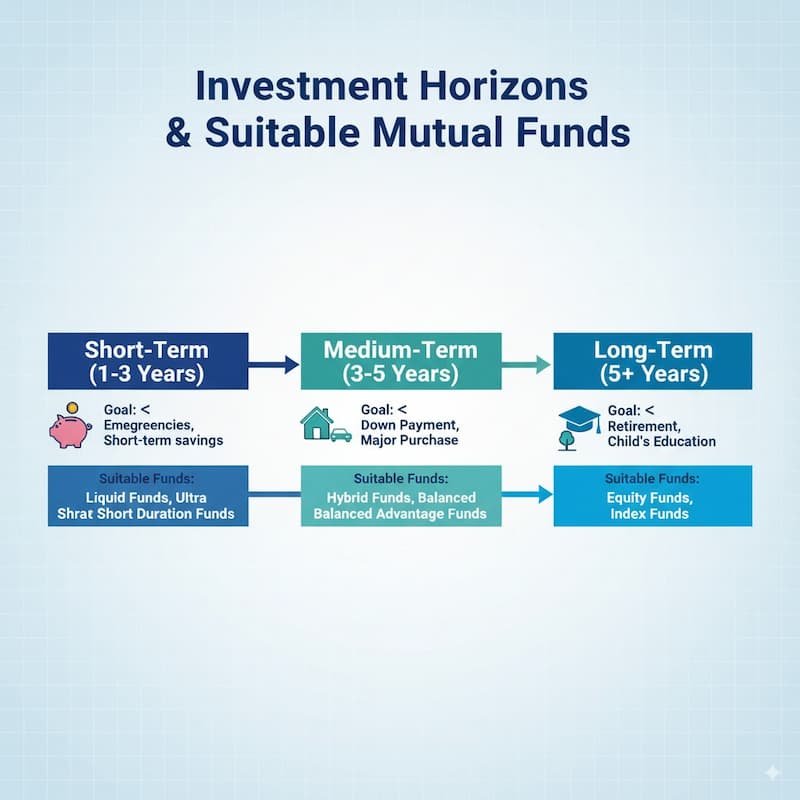
- Short-Term (1–3 years): Debt funds like liquid or ultra-short duration funds are more suitable.
- Medium-Term (3–5 years): Hybrid funds or balanced funds can provide stability and moderate returns.
- Long-Term (5+ years): Equity funds, such as large-cap, mid-cap, or small-cap funds, are suitable for higher returns over time.
Aligning your investment horizon with your selected fund is crucial for maximizing returns while managing risk.
4. Choose the Appropriate Mutual Fund Category
Based on your financial goals, risk tolerance, and investment horizon, you can select from various mutual fund categories:
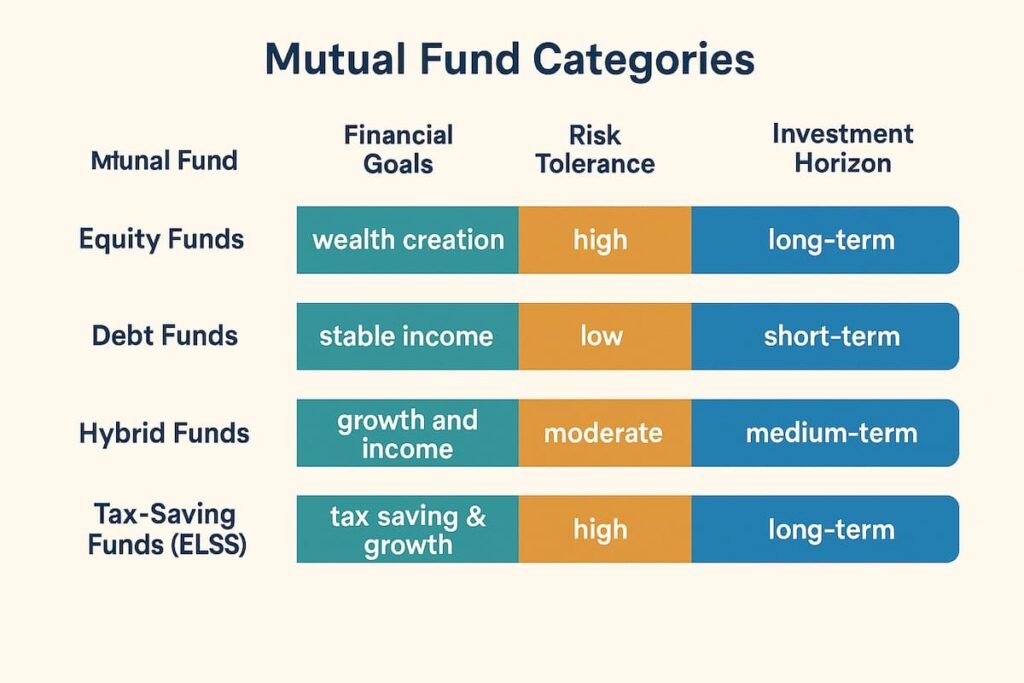
- Equity Funds: Invest primarily in stocks, ideal for long-term wealth creation.
- Debt Funds: Invest in fixed-income securities, perfect for those seeking stable returns.
- Hybrid Funds: A mix of equity and debt to balance risk and return.
- Tax-Saving Funds (ELSS): These funds offer tax benefits under Section 80C and come with a 3-year lock-in period.
Each category has its characteristics, so it’s essential to match them with your financial needs.
5. Evaluate Fund Performance and Metrics
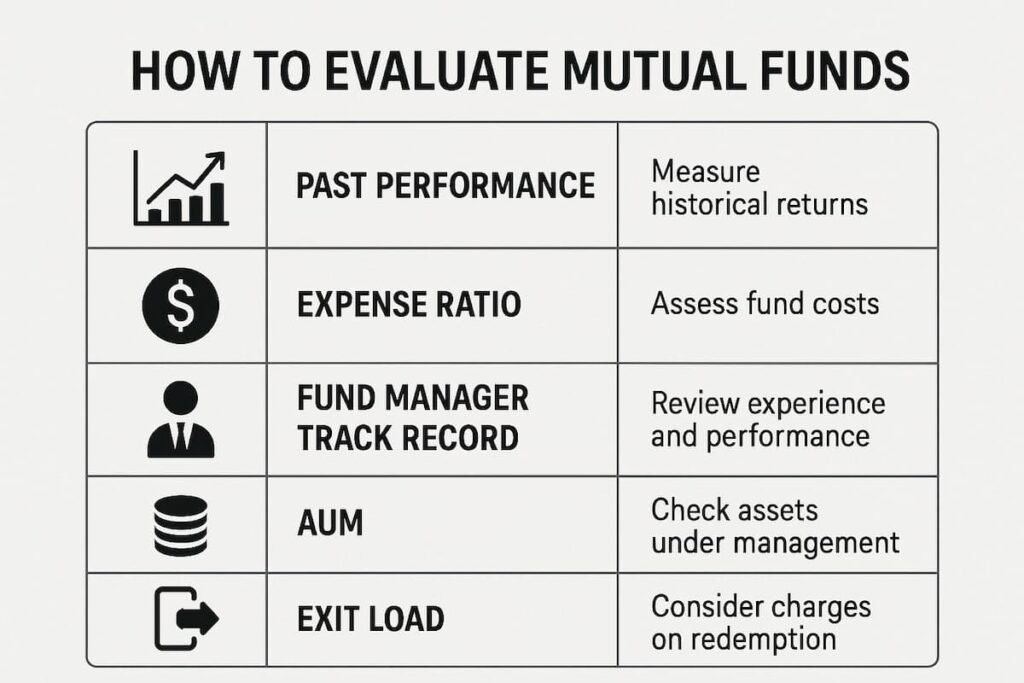
Before investing, evaluate the following:
- Past Performance: While not a guarantee for future returns, a fund’s consistent performance can be an indicator of its management quality.
- Expense Ratio: A lower expense ratio means more of your money is invested.
- Fund Manager’s Track Record: An experienced fund manager can navigate market volatility better.
- Assets Under Management (AUM): A higher AUM indicates that investors trust the fund.
- Exit Load: Understand the charges if you exit the fund early.
Using tools like the Morningstar Style Box can help visualize a fund’s risk profile and performance.
6. Consider Tax Implications
Tax treatment varies between different types of funds:
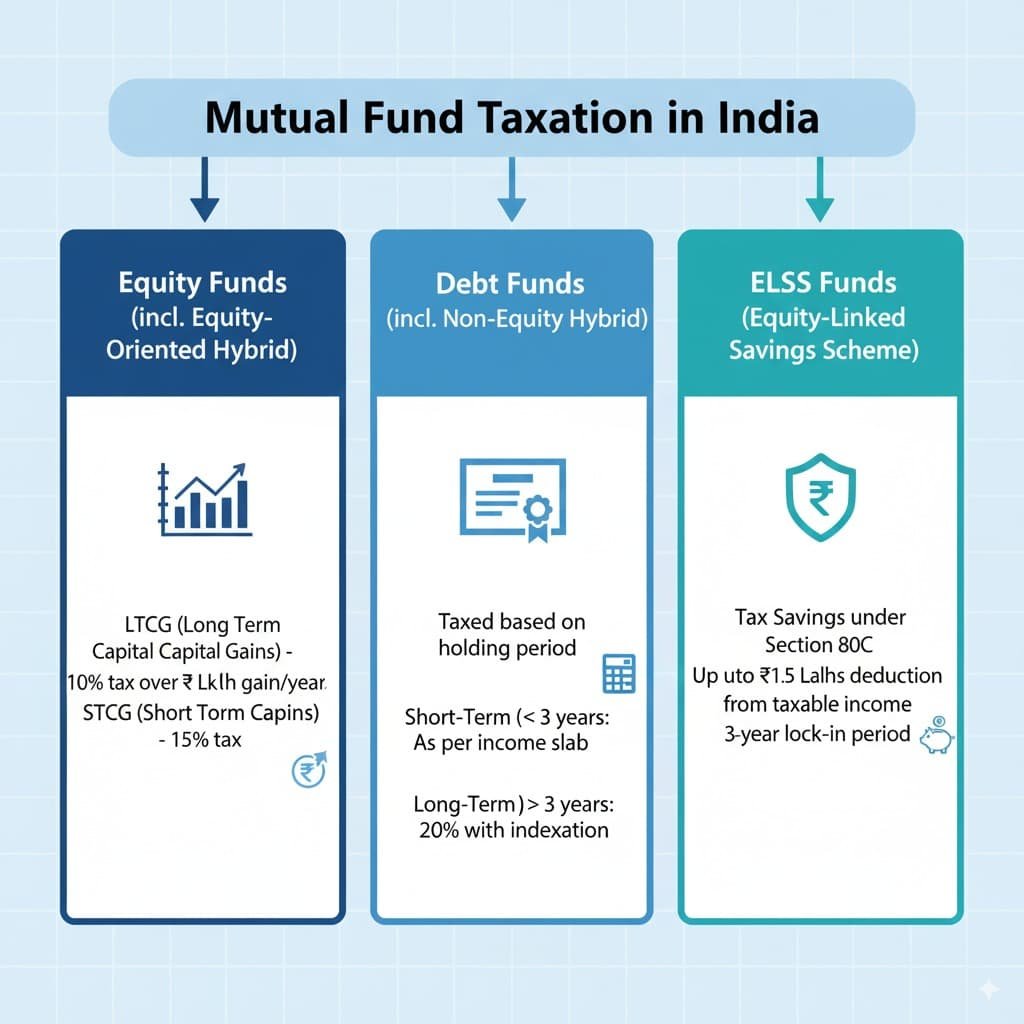
- Equity Funds: Long-term capital gains (LTCG) tax applies if units are sold after one year.
- Debt Funds: Taxed based on holding period, and indexation benefits apply for long-term holdings.
- ELSS Funds: Offer tax deductions under Section 80C and have a 3-year lock-in period.
Understanding tax implications can help you choose tax-efficient funds.
7. Diversify Your Portfolio
To reduce risk, avoid putting all your investments into a single fund. Diversification across different categories can help smoothen returns and mitigate potential losses.
🔍 Examples: Selecting the Right Mutual Fund Based on Different Goals
1. Selecting a Mutual Fund for Retirement Planning
Scenario:
- Goal: Retirement Planning
- Risk Tolerance: Moderate
- Investment Horizon: Long-Term (30+ years)

Recommended Fund Category:
- Hybrid Funds: Hybrid funds balance between equity and debt, offering growth potential with reduced volatility.
Example Funds:
- HDFC Balanced Advantage Fund: This fund dynamically adjusts its equity and debt allocation based on market conditions.
- ICICI Prudential Balanced Fund: This fund invests in a balanced mix of equity and debt, suitable for long-term goals like retirement.
These funds align well with the investor’s risk tolerance and long-term horizon.
2. Selecting a Mutual Fund for Children’s Education
Scenario:
- Goal: Children’s Education
- Risk Tolerance: Moderate to High
- Investment Horizon: Medium to Long-Term (10-15 years)
Recommended Fund Category:
- Equity Funds: These funds invest in stocks and are ideal for growing a corpus over time, with the potential for higher returns.
Example Funds:
- SBI Bluechip Fund: Invests in large-cap stocks, offering stability and growth potential for long-term goals like education.
- Mirae Asset Emerging Bluechip Fund: A combination of mid-cap and large-cap stocks, providing higher growth potential for a medium-term goal.
These funds are suitable for investors who want higher growth for their child’s education, balancing risk and reward.
3. Selecting a Mutual Fund for Wealth Creation
Scenario:
- Goal: Wealth Creation
- Risk Tolerance: High
- Investment Horizon: Long-Term (10+ years)
Recommended Fund Category:
- Equity Funds (Large, Mid, Small Cap): These funds offer higher growth potential but come with higher volatility.
Example Funds:
- Axis Growth Opportunities Fund: A mid-cap fund that focuses on growing companies with strong potential.
- Franklin India Smaller Companies Fund: A small-cap fund that invests in smaller companies with high growth prospects.
These funds are suitable for aggressive investors looking to maximize wealth over the long term.
4. Selecting a Mutual Fund for Tax Saving
Scenario:
- Goal: Tax Saving
- Risk Tolerance: Moderate to High
- Investment Horizon: Short to Medium-Term (3-5 years)
Recommended Fund Category:
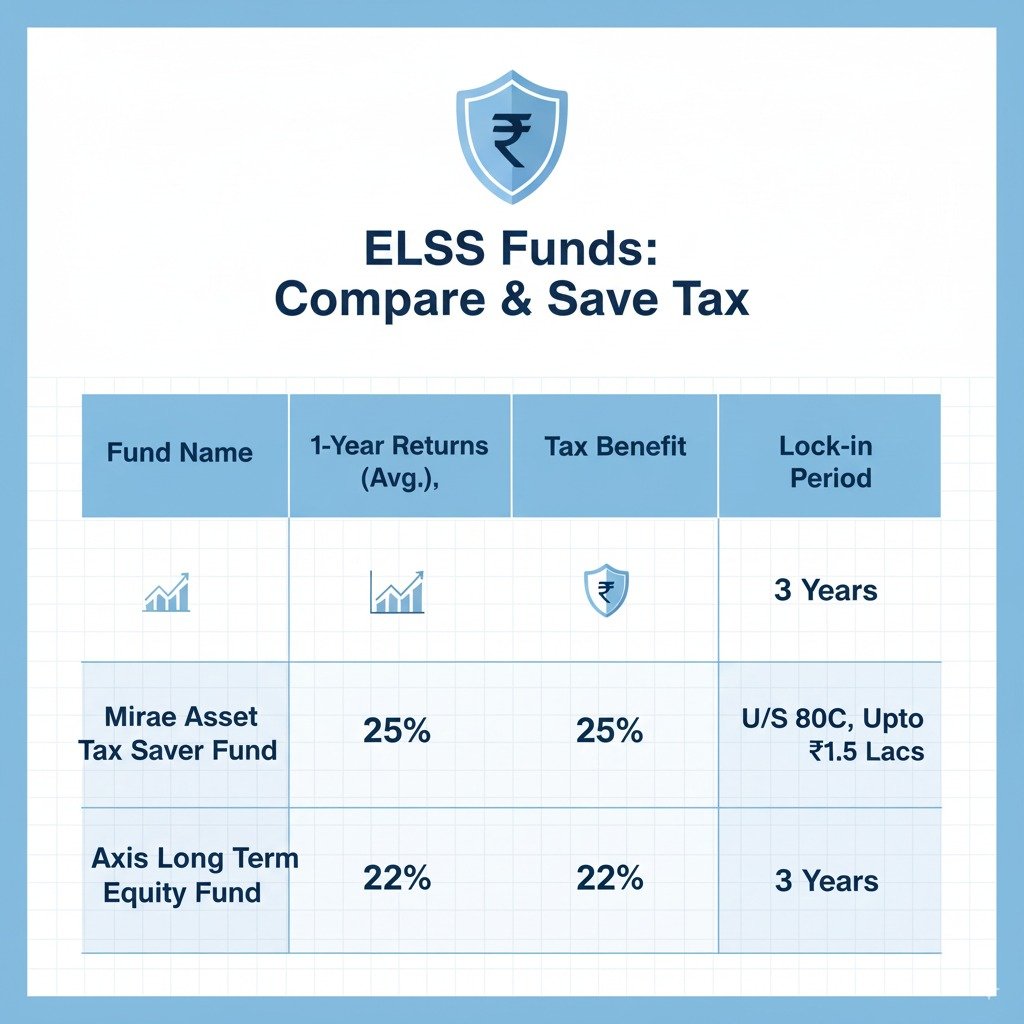
- Equity Linked Savings Schemes (ELSS): ELSS funds offer tax-saving benefits under Section 80C of the Income Tax Act.
Example Funds:
- Mirae Asset Tax Saver Fund: This fund provides tax savings along with equity exposure, ideal for long-term growth.
- Axis Long Term Equity Fund: A popular ELSS fund with a good track record of delivering strong returns while offering tax benefits.
These funds are ideal for investors looking to save taxes while investing for the long term.
🧾 Conclusion
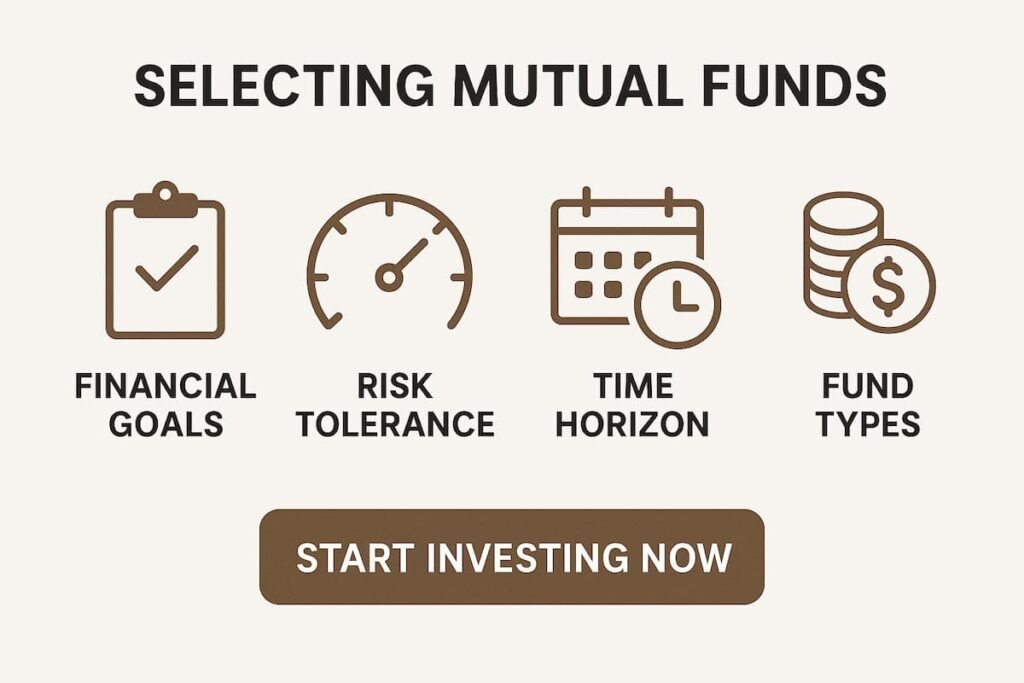
Choosing the right mutual fund involves aligning your investment choices with your financial goals, risk tolerance, and time horizon. By following the steps outlined above, you can make informed decisions that will help you achieve your financial objectives in 2025 and beyond. Diversifying your investments and considering tax implications will further enhance your investment strategy.
📑 FAQ: Frequently Asked Questions about Choosing Mutual Funds
1. What is the best type of mutual fund for long-term investment?
Long-term investors often prefer equity funds as they offer higher returns over time despite short-term volatility.
2. How do I know which mutual fund is right for me?
Assess your financial goals, risk tolerance, and investment horizon. This will help you determine whether you should choose equity, debt, or hybrid funds.
3. What is the minimum investment required to invest in a mutual fund?
The minimum investment varies by fund, but it typically starts from as low as ₹500 for SIP (Systematic Investment Plan) investments.
4. Can mutual funds provide regular income?
Yes, debt funds or hybrid funds are suitable for generating regular income as they invest in fixed-income securities.
5. What are the tax benefits of investing in ELSS funds?
ELSS funds offer tax deductions under Section 80C of the Income Tax Act, and the investment comes with a 3-year lock-in period.
6. How do I diversify my mutual fund portfolio?
Diversify by investing across different categories such as equity, debt, hybrid, and tax-saving funds to balance risk and returns.
7. Is it safe to invest in mutual funds?
While mutual funds are generally safer than individual stocks, the risk varies depending on the type of fund. Equity funds carry higher risk compared to debt funds.
8. What factors should I consider before investing in a mutual fund?
Consider factors like fund performance, expense ratio, fund manager’s experience, investment strategy, and tax implications before investing.