
Mutual funds are a popular investment choice for many, offering diversification, professional management, and accessibility to various asset classes. However, like any investment, mutual funds carry inherent risks. Understanding these risks and adopting strategies to mitigate them is essential for maximizing returns and safeguarding your capital.
In this blog, we will explore the different types of risks associated with mutual fund investing, with a focus on the various factors that can affect your investments. Additionally, we will provide actionable tips to help you reduce these risks and make informed decisions.
Types of Risks in Mutual Funds
1. Market Risk
Market risk is the risk of investment losses due to factors affecting the overall performance of financial markets. This could include economic downturns, political instability, inflation, or changes in interest rates. The value of a mutual fund can fluctuate as a result of market conditions, particularly equity-oriented funds that are sensitive to market movements.
Example:
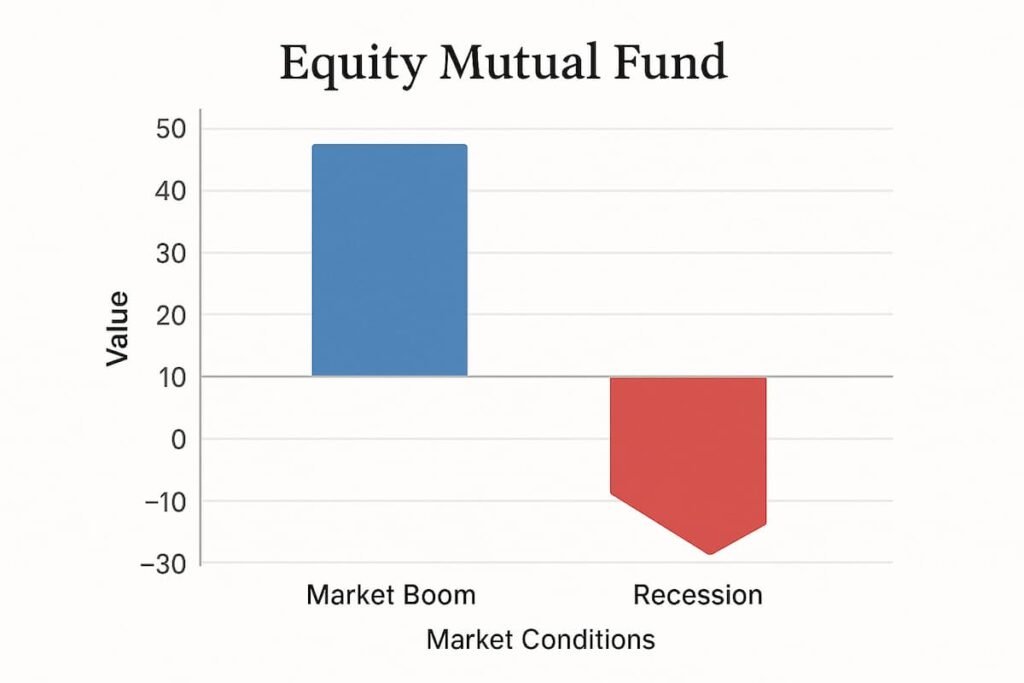
If you invest in an equity mutual fund during a market boom, you may see significant gains. However, during a market crash or recession, the value of the fund can decline.
Mitigation Strategies:
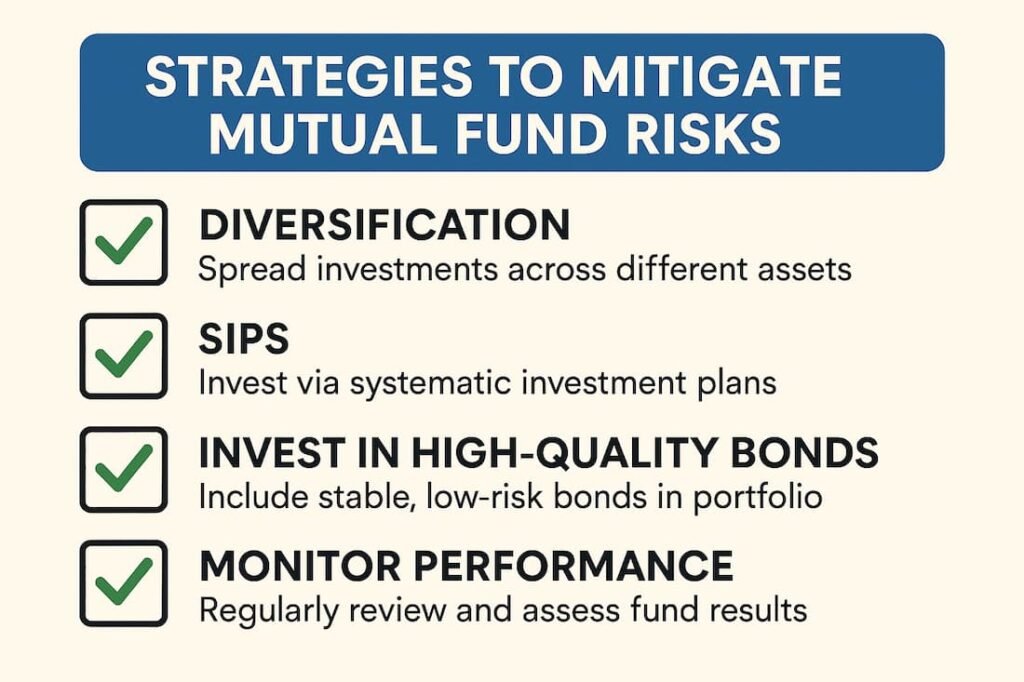
- Diversification: Spread investments across various asset classes (equity, debt, gold, etc.) and sectors to reduce dependence on a single market factor.
- Systematic Investment Plans (SIPs): Invest a fixed amount regularly, which helps in averaging out the cost of purchasing units over time, reducing the impact of short-term market volatility.
- Long-Term Investing: Stay invested for the long term to ride out market fluctuations. Historically, markets tend to recover from downturns over time.
2. Credit Risk
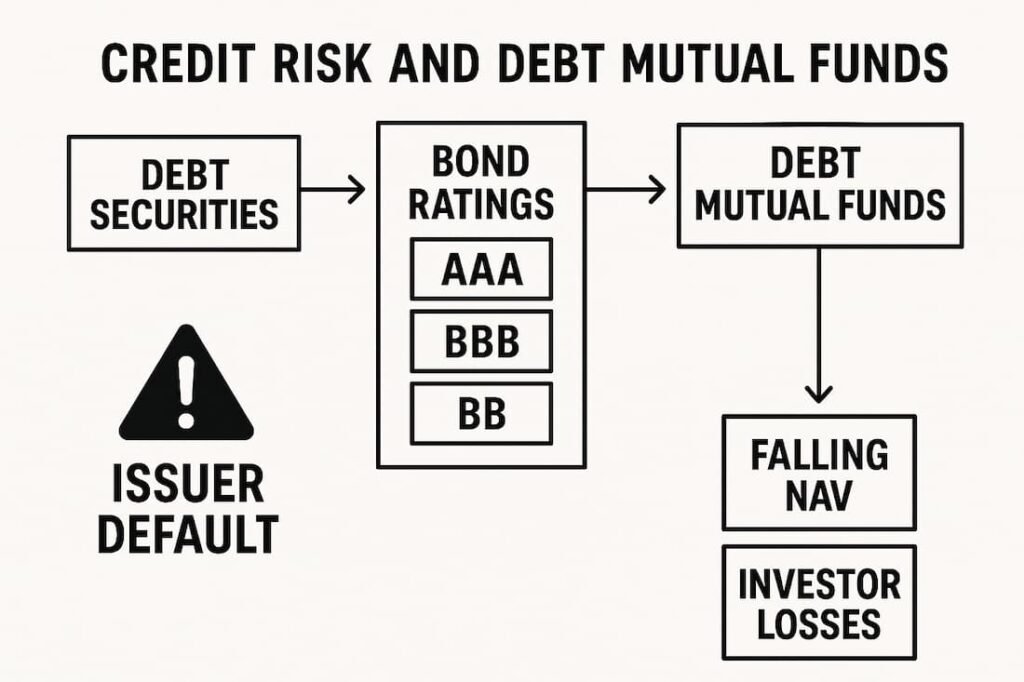
Credit risk arises when the issuer of a bond or debt instrument (held within a debt mutual fund) fails to meet its financial obligations, such as paying interest or principal. This risk is more prevalent in debt-oriented funds, particularly those investing in lower-rated corporate bonds.
Example:
If you invest in a debt fund that holds bonds issued by companies with a poor credit rating, the issuer may default on its payments, which could lead to losses for the fund.
Mitigation Strategies:
- Invest in High-Quality Bonds: Choose debt funds that focus on investing in government securities or high-rated corporate bonds.
- Diversify Debt Holdings: Select funds that hold a mix of debt instruments to spread the credit risk.
- Regular Monitoring: Keep track of the credit ratings of the bonds held within the fund’s portfolio and make adjustments accordingly.
3. Liquidity Risk
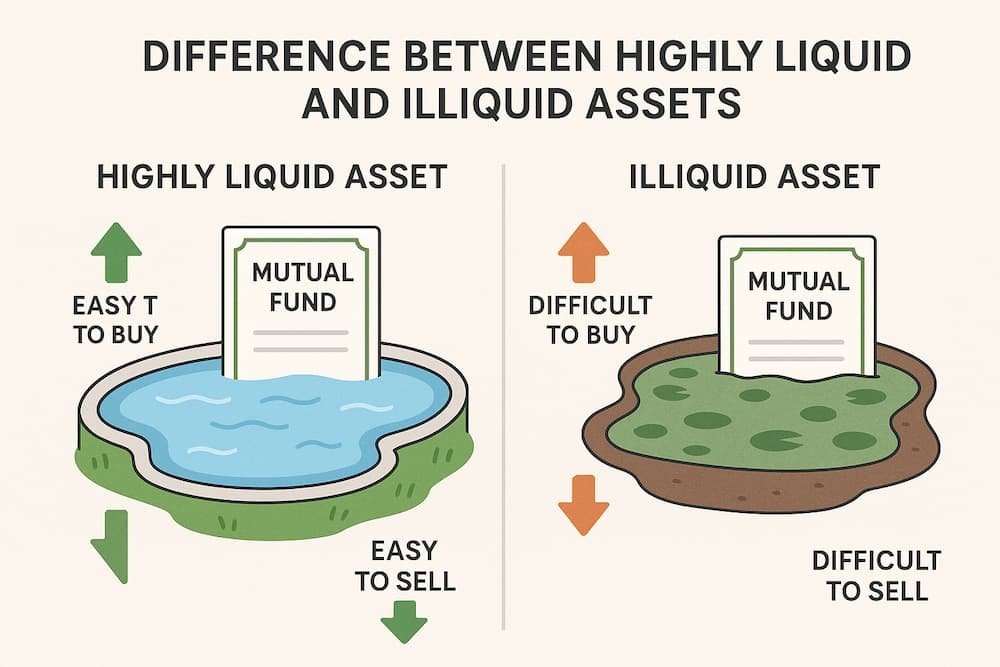
Liquidity risk is the risk that an investor may not be able to buy or sell mutual fund units quickly without significantly affecting the price. This can be an issue, especially in funds that invest in less liquid assets such as real estate or long-term bonds.
Example:
In case of a sudden need for liquidity, you might face delays or difficulties in selling your units in a fund that primarily invests in assets with limited marketability.
Mitigation Strategies:
- Invest in Liquid Funds: For short-term needs, consider investing in funds that focus on short-term, highly liquid instruments like government treasury bills or short-term corporate bonds.
- Avoid Overconcentration: Spread your investments across multiple funds, especially those that offer high liquidity, to ensure flexibility in case of redemption.
- Understand Redemption Terms: Be aware of lock-in periods or any redemption restrictions imposed by the fund.
4. Interest Rate Risk
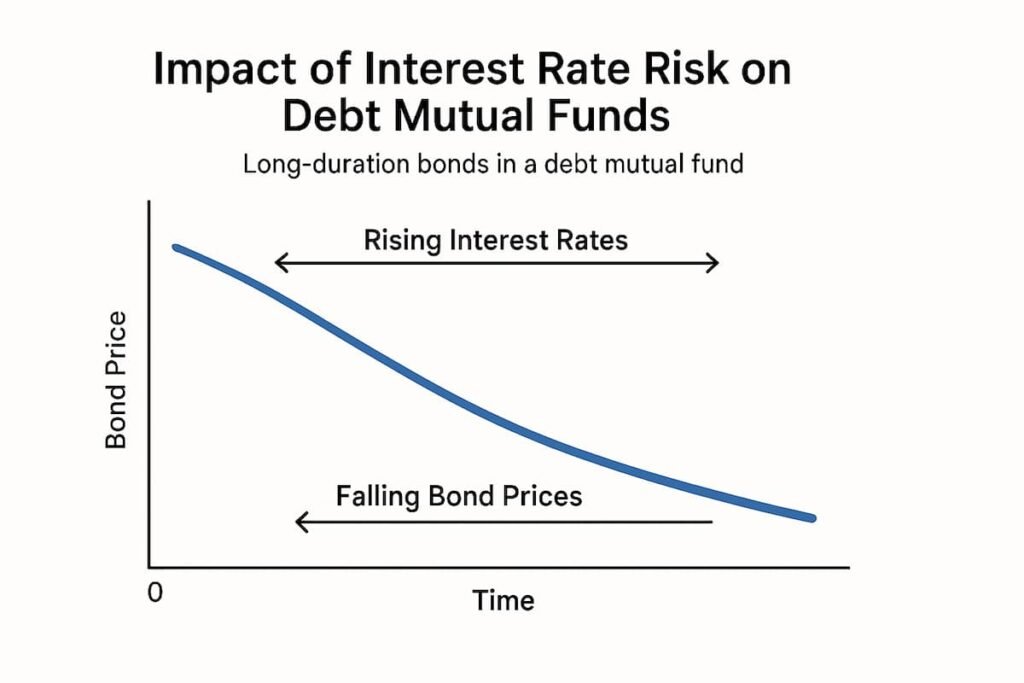
Interest rate risk impacts the value of fixed-income securities within mutual funds. When interest rates rise, the value of existing bonds typically falls, which can reduce the net asset value (NAV) of debt funds. This risk is particularly relevant to investors holding long-duration bonds.
Example:
If you invest in a bond fund with long-duration bonds, an increase in interest rates could cause the bond prices to fall, thus negatively impacting the fund’s value.
Mitigation Strategies:
- Invest in Funds with Short Duration: If you expect interest rates to rise, consider funds that invest in short-term bonds, which are less sensitive to interest rate fluctuations.
- Laddering Strategy: Spread investments across bonds with different maturity dates to reduce interest rate risk.
- Active Monitoring: Keep an eye on interest rate trends and adjust your portfolio accordingly.
5. Management Risk
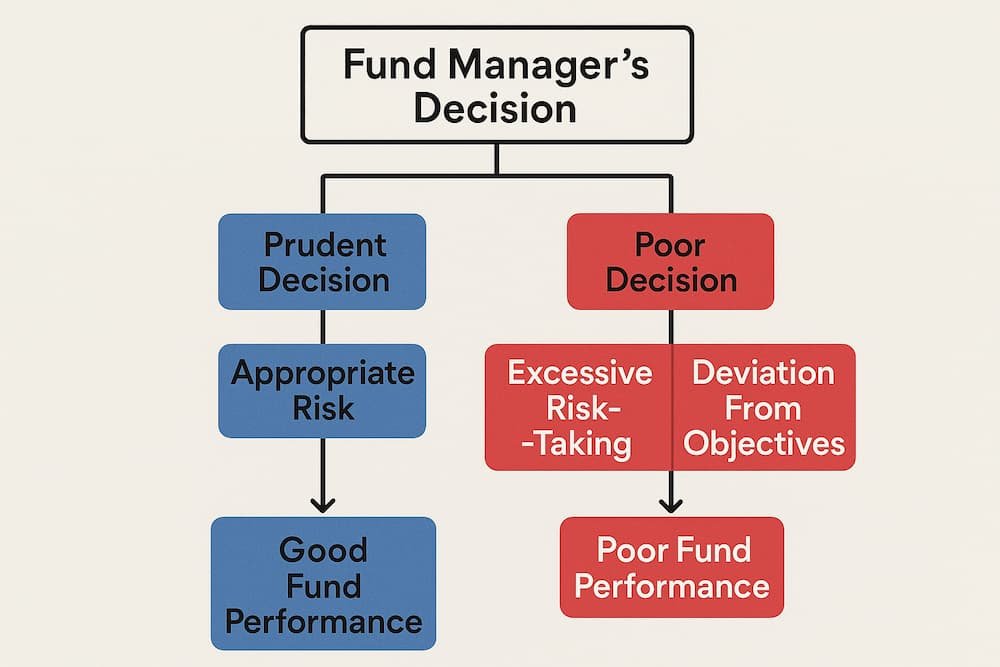
Management risk is the risk that the fund manager’s decisions may not align with the fund’s objectives, resulting in suboptimal performance. This risk arises if the manager takes on too much risk or fails to manage the fund effectively.
Example:
If a fund manager takes excessive risks in pursuit of higher returns, the fund’s value may fluctuate drastically, leading to potential losses.
Mitigation Strategies:
- Research Fund Managers: Choose funds managed by experienced professionals with a strong track record.
- Review Fund Objectives: Ensure that the fund’s strategy aligns with your investment goals and risk tolerance.
- Monitor Performance Regularly: Track the fund’s performance and consider switching if the manager’s decisions are consistently underperforming.
6. Operational Risk
Operational risk involves the possibility of losses due to failures in the mutual fund’s processes, systems, or due to external events like cyberattacks or technical issues.
Mitigation Strategies:
- Invest in Well-Established Fund Houses: Choose mutual funds offered by reputed and well-regulated asset management companies with strong operational controls.
- Monitor Service Providers: Ensure that the fund’s custodians, auditors, and other service providers are reliable and have effective risk management systems in place.
- Stay Informed: Keep an eye on operational challenges or changes in the fund’s management or structure that could affect its performance.
FAQs on Mutual Fund Risks
1. Types of Risks in Mutual Funds
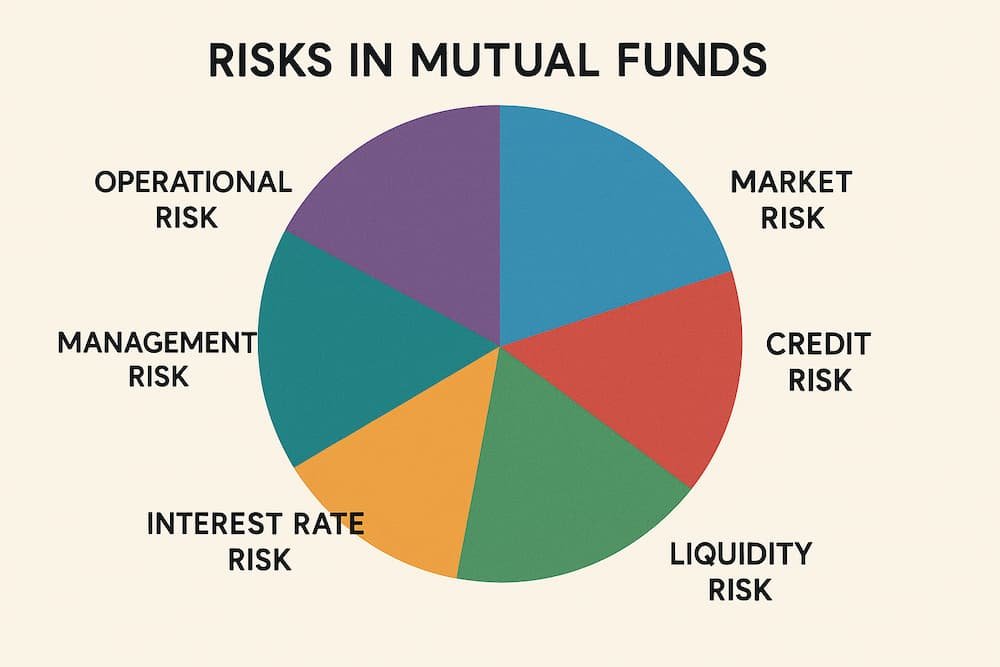
There are various types of risks associated with mutual funds, including market risk, credit risk, liquidity risk, interest rate risk, management risk, and operational risk. Understanding these risks can help you make informed investment decisions.
2. Mutual Funds Risk: High or Low?
The risk in mutual funds varies based on the type of fund. Equity funds generally carry higher risks but offer higher returns. On the other hand, debt funds are considered low-risk but provide lower returns. Hybrid funds offer a balanced risk-return profile.
3. How to Reduce Risk in Mutual Fund?
To reduce risk in mutual funds, consider diversifying your portfolio across asset classes, investing via SIPs, choosing high-quality funds, and monitoring your investments regularly. Additionally, investing for the long term can help mitigate short-term market fluctuations.
4. Risk of Mutual Funds in India
The risks of mutual funds in India are similar to those in other countries, including market risk, interest rate risk, and liquidity risk. However, market volatility in India can sometimes be higher due to global and domestic economic factors.
5. Is Mutual Fund Safe for Long-Term?
Mutual funds are generally safe for long-term investing, especially if you invest in diversified equity or debt funds that match your risk profile. Long-term investors tend to benefit from compounding, market recovery, and reduced short-term volatility.
6. Mutual Fund Risk Calculator
A mutual fund risk calculator can help you assess the potential risks of a mutual fund based on various factors such as historical performance, volatility, and asset allocation. This tool helps you understand if the fund fits your risk tolerance.
7. Market Risk in Mutual Funds
Market risk in mutual funds refers to the risk that the overall market conditions (such as economic downturns, changes in interest rates, or political instability) can negatively affect the value of the fund. This risk is particularly relevant for equity funds.
8. Liquidity Risk in Mutual Funds
Liquidity risk in mutual funds refers to the risk that you may not be able to redeem your mutual fund units quickly or at a fair price due to low market activity or restrictions. Investing in highly liquid funds can help mitigate this risk.
Conclusion
Investing in mutual funds provides an opportunity for wealth growth, but it is important to be aware of the risks involved. By understanding the various risks—such as market risk, credit risk, liquidity risk, and management risk—and implementing strategies to mitigate them, investors can reduce potential losses and enhance the chances of achieving their financial goals.