

Applying for a credit card has become an essential financial activity in India, as it offers numerous benefits such as easy access to funds, rewards programs, and emergency financial support. With the rise of online banking, applying for a credit card online is now a popular and convenient choice. But is it better than the traditional offline method of applying at a bank branch? In this post, we’ll dive into the benefits of applying for a credit card online versus offline, helping you make an informed decision.
1. Convenience and Accessibility
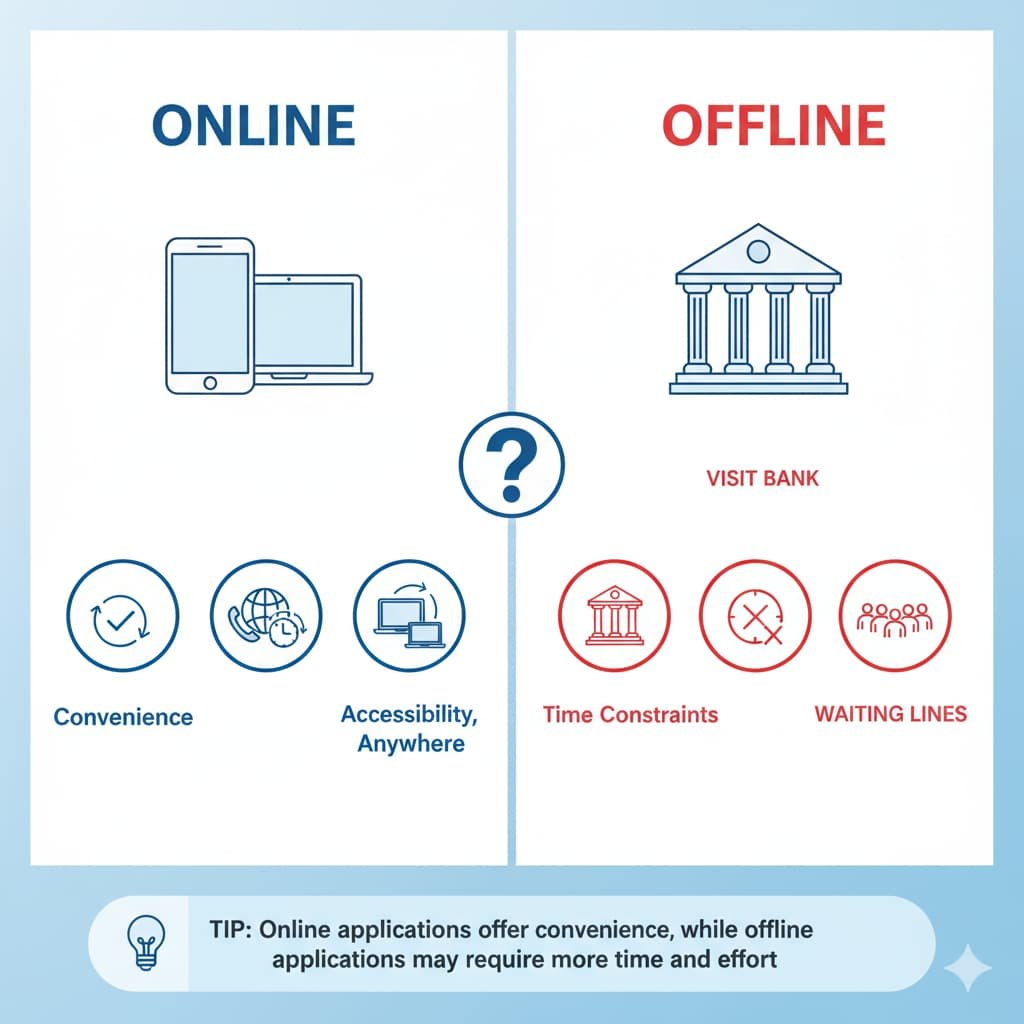
Online: One of the main benefits of applying for a credit card online is the convenience it offers. You can apply anytime, from anywhere, without needing to visit a bank. Whether you’re at home, in a café, or during your lunch break at work, you can fill out your application on your phone or computer. Many banks now offer user-friendly interfaces on their websites and mobile apps that make the process faster and more intuitive.
Example: Imagine you’re looking to apply for a credit card from a leading bank like HDFC or ICICI. All you need to do is visit their website or app, select the card that suits your needs, and fill in the application form with your details. You don’t have to take time off work or visit a branch, making it a more flexible and accessible process.
Offline: Applying for a credit card offline requires you to visit a bank during business hours, usually Monday to Friday, which can be time-consuming and inconvenient. If the branch is far from your location or has long waiting lines, the process can take much longer.
2. Faster Processing and Approval
Online: When you apply for a credit card online, the process is typically faster. Many banks offer instant or near-instant approval for online applicants, especially if you meet the eligibility criteria. Once your application is submitted, some banks even provide immediate access to a virtual card that can be used online, making the whole experience seamless.
Example: For instance, if you apply for a credit card online with a bank like SBI, your application could be processed within a few minutes, and you may receive an immediate approval decision. If approved, you might even start using a virtual card until your physical card arrives.
Offline: In comparison, applying offline usually involves a manual review of your documents and information, which can take several days. Moreover, you might need to visit the branch multiple times for document submission or clarifications, extending the waiting period.
3. Easy Comparison of Credit Card Options
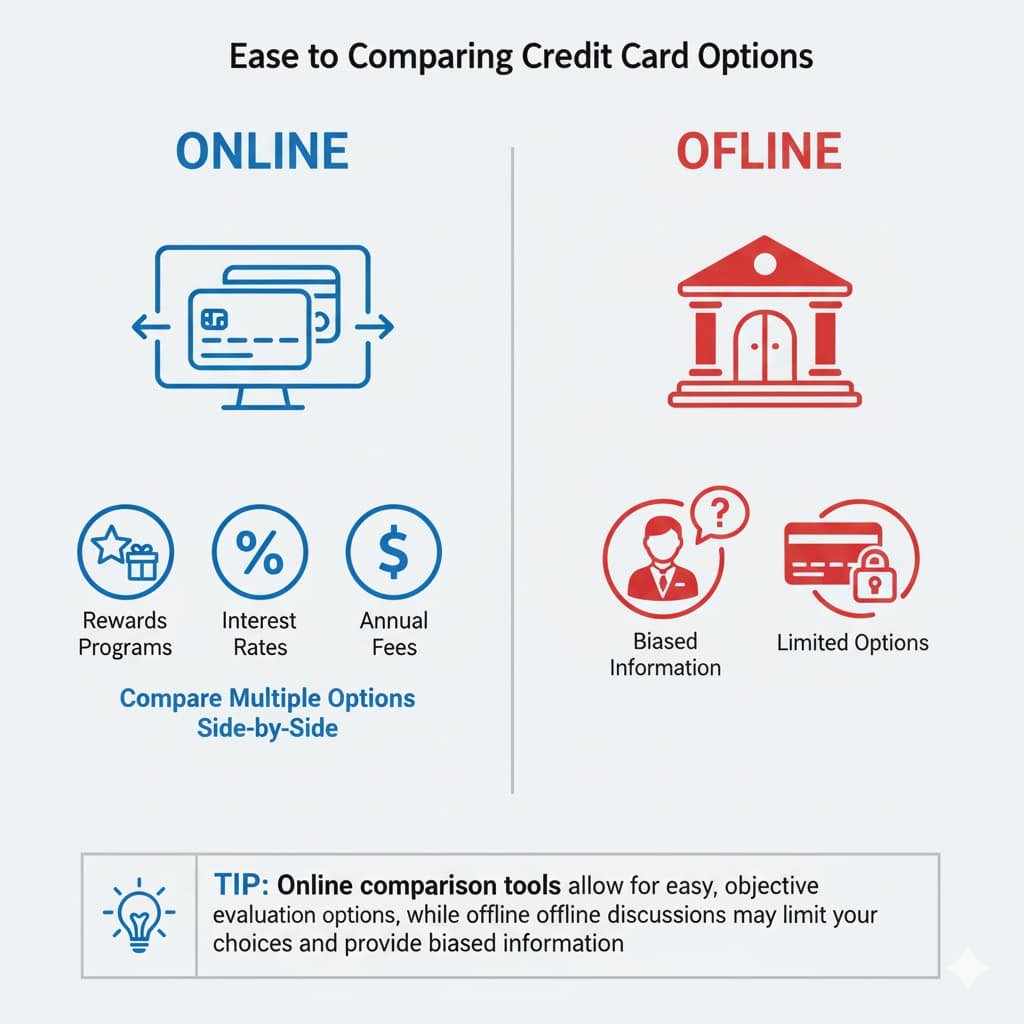
Online: When applying online, you can easily compare different credit cards based on their features such as rewards programs, interest rates, annual fees, and eligibility criteria. Banks often provide comparison tools that allow you to select multiple cards and view all the benefits side by side.
Example: Let’s say you are considering a rewards card from one bank and a cashback card from another. You can compare them side by side on the bank’s website, checking the interest rates, cashback percentages, and annual fees, all in one place, helping you make a well-informed decision.
Offline: Offline applications may limit your ability to compare multiple credit cards quickly. When you visit a bank branch, you may only be presented with the options available at that branch, and the bank representative may only provide information on cards they are trying to promote, which could be biased.
4. Access to Exclusive Online Offers
Online: Banks often provide exclusive offers for online credit card applications. These offers could include benefits such as waived processing fees, cashback on the first purchase, or bonus reward points for online applications. Additionally, online applicants may also receive special promotions during festivals or major sales events.
Example: For instance, ICICI Bank frequently offers special discounts or bonus reward points on new credit cards applied for during major festivals like Diwali. These online-exclusive offers are not available through offline applications.
Offline: Offline applications may not have access to such exclusive online offers. If you apply for a credit card at a branch, you may miss out on promotional deals available only for online applicants.
5. Enhanced Security Measures
Online: Most online credit card applications are encrypted with Secure Socket Layer (SSL) technology, ensuring that your personal information is transmitted securely. Banks use multi-layered security measures to protect against data breaches, ensuring that your sensitive data remains confidential.
Example: When you apply for a credit card through HDFC’s website, you’ll notice the padlock symbol next to the URL, indicating that the website is secure and your data will be encrypted.
Offline: Offline applications, while typically secure, involve handing over physical copies of documents that could be misplaced or mishandled. There is also the possibility of errors in handling sensitive data during document submission.
6. Real-Time Updates and Tracking
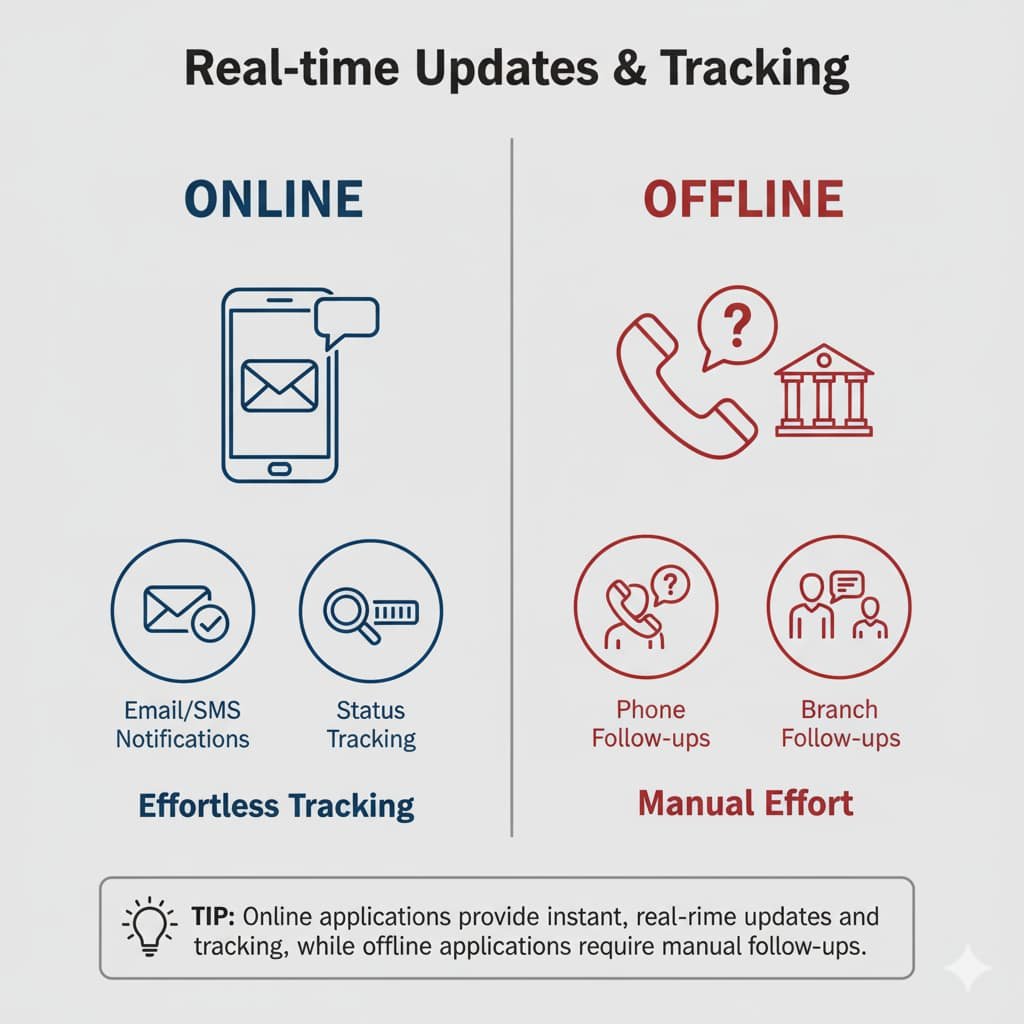
Online: One of the key benefits of applying for a credit card online is the ability to track the progress of your application in real-time. Most banks offer status updates via email or SMS. You can see if your application is approved, rejected, or requires further documentation, ensuring that you’re always informed.
Example: After submitting your credit card application online with Axis Bank, you’ll receive an SMS or email with updates on your application status, reducing the need to contact the bank for information.
Offline: Offline applicants may not receive real-time updates. To track the status of your offline application, you may need to follow up with the bank, either by phone or by visiting the branch again.
7. Eco-Friendly and Paperless Process
Online: Online applications are paperless. You can upload your documents digitally and complete the entire process without using any physical paper, which is environmentally friendly and efficient.
Example: Instead of submitting hard copies of documents like your PAN card or utility bills at the bank branch, you can simply scan and upload them as part of your online application process.
Offline: Offline credit card applications require you to provide physical copies of documents, which can result in more paper usage and environmental waste.
FAQs:
1. How long does it take for my credit card to be approved online?
Approval times for online credit card applications vary, but they are generally faster than offline methods. If you meet the eligibility criteria, some banks offer instant or conditional approval. You may receive your credit card within a few days or even have immediate access to a virtual card.
2. Can I apply for a credit card online if I have a low credit score?
Yes, many banks offer credit cards for individuals with a low or no credit score. However, you may be offered cards with lower credit limits or higher interest rates. Some banks may also require you to pay a deposit if you are a first-time applicant with a low score.
3. Are online credit card applications secure?
Yes, applying for a credit card online is secure when done through official and reputable banks. Banks use encryption, secure sockets layer (SSL) protocols, and other cybersecurity measures to protect your personal data during the application process.
4. Do online applications offer better credit card deals?
Online applications often provide access to exclusive deals, such as waived processing fees, higher reward points, or special bonuses. These deals are often available only through online applications, so you may miss out if you apply offline.
5. Can I change my credit card application after submitting it online?
Once you’ve submitted an online application, you may not be able to make changes. However, some banks allow you to update or correct information within a certain period. Contact customer service immediately if you notice an error after submission.
Conclusion: Online vs. Offline Credit Card Application in India
While both online and offline methods have their advantages, applying for a credit card online in India is often more convenient, faster, and secure. The ability to compare multiple options, access exclusive offers, and track your application status in real-time makes the online application process the preferred choice for most consumers.
If you value convenience, quick approval, and the ability to compare offers with ease, applying for a credit card online is the way to go. However, if you prefer in-person consultations or feel more comfortable interacting face-to-face with a bank representative, offline applications are still a viable option.
Ultimately, the choice depends on your personal preferences and needs, but the benefits of applying online are clear and compelling.