

Mutual funds have emerged as a popular investment option in India, offering individuals an easy and efficient way to build wealth. With numerous types of mutual funds available, it can be challenging to choose the right one for your financial goals. This blog will provide an in-depth look at the various types of mutual funds in India, discussing their investment horizons, risk levels, returns, and suitability for different investors. Whether you are a beginner or an experienced investor, this guide will help you understand which mutual fund is right for you in 2025.
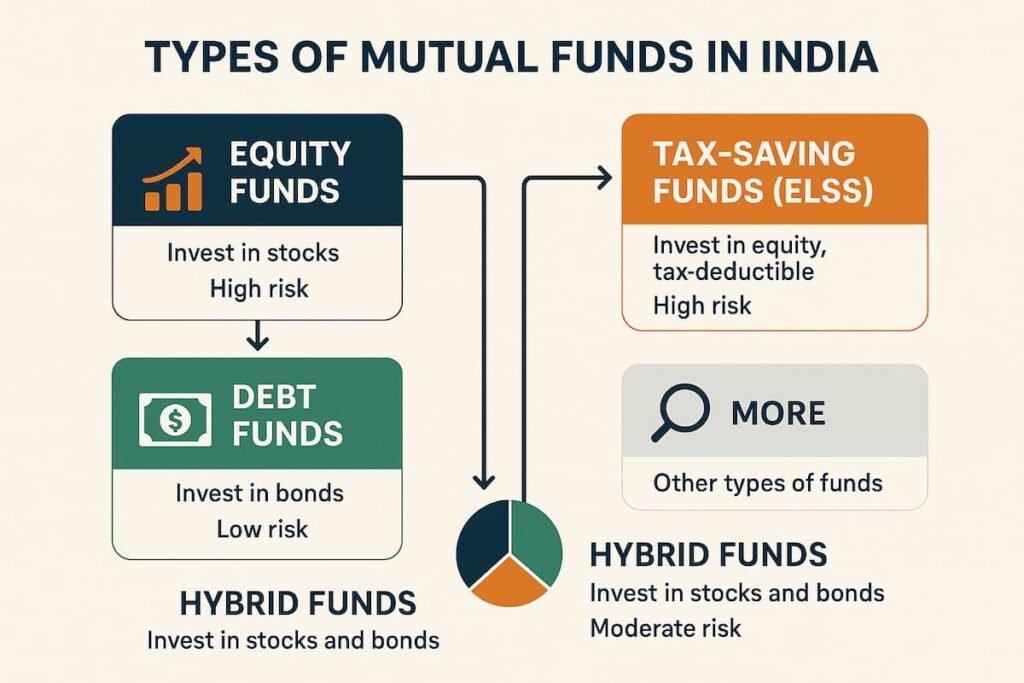
🏦 Types of Mutual Funds in India
1. Equity Mutual Funds
Investment Horizon: Long-term (5+ years)
Risk Level: High
Suitability: Ideal for investors who are willing to take high risks in exchange for potentially higher returns.
Returns: Historically, equity funds have offered substantial returns, ranging from 12% to 15% annually, depending on market conditions. However, they come with the risk of significant short-term volatility.
Example:
- SBI Bluechip Fund: A large-cap equity mutual fund that focuses on investing in top-performing, stable companies in India.
- ICICI Prudential Technology Fund: A sectoral fund that focuses on investing in the technology sector, which has been booming in recent years.
Explanation:
Equity mutual funds primarily invest in stocks of various companies, aiming for capital appreciation over time. These funds are suitable for investors who are willing to endure market fluctuations for the potential of higher long-term returns. Within equity mutual funds, you’ll find sub-categories like large-cap, mid-cap, small-cap, and sectoral funds, each varying in terms of risk and returns.
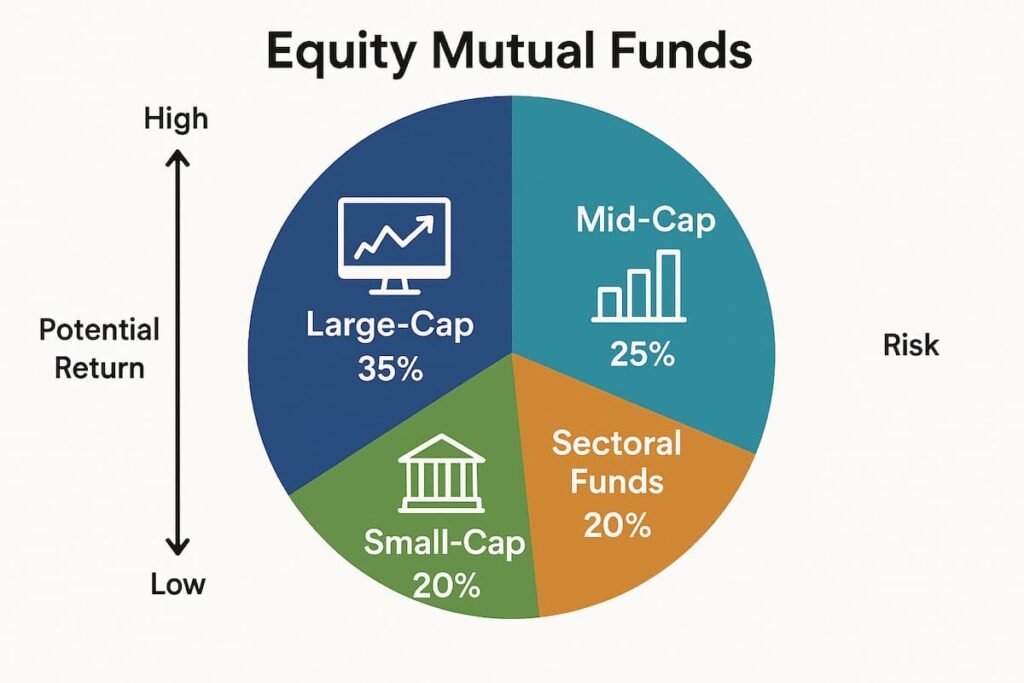
- Large-Cap Funds: Invest in large, established companies with a stable track record. These funds tend to be less volatile.
- Mid-Cap Funds: Focus on companies with medium market capitalization, offering a balanced mix of risk and potential growth.
- Small-Cap Funds: Invest in smaller companies that are expected to grow rapidly, but they come with higher risk.
- Sectoral Funds: Focus on specific sectors like technology, healthcare, or finance.
2. Debt Mutual Funds
Investment Horizon: Short to medium-term (1-5 years)
Risk Level: Low to Medium
Suitability: Best suited for conservative investors who seek steady income and low-risk investments.
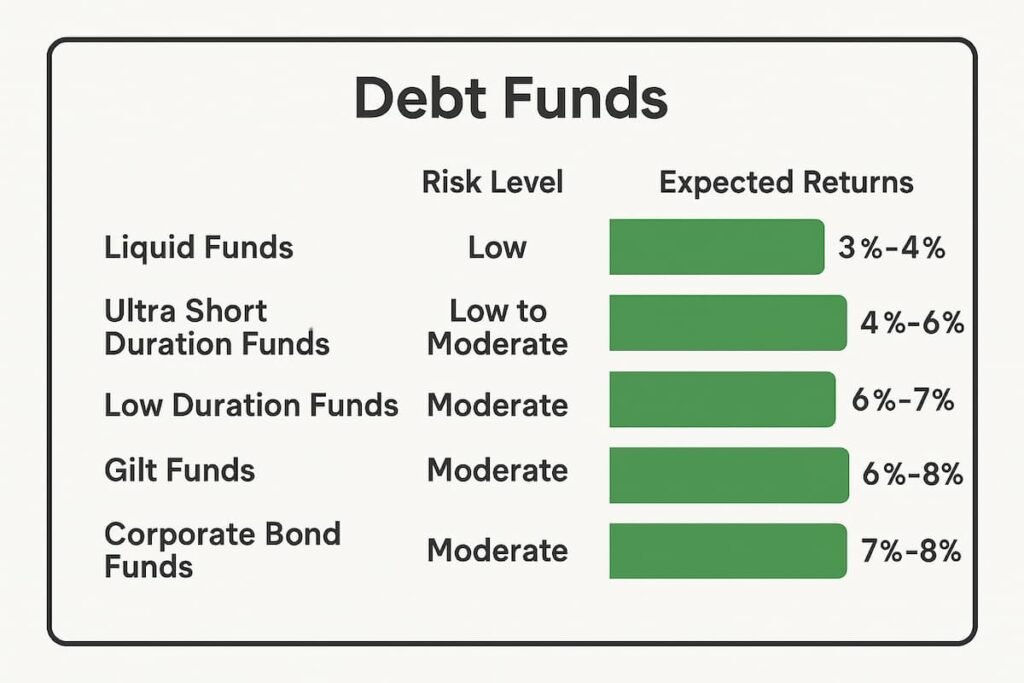
Returns: Debt funds offer returns in the range of 4% to 8% annually, which are generally stable but lower than equity funds.
Example:
- HDFC Corporate Bond Fund: A debt fund investing in high-quality corporate bonds, offering moderate returns with lower risk.
- ICICI Prudential Liquid Fund: A liquid fund focusing on very short-term instruments, suitable for investors who need liquidity.
Explanation:
Debt mutual funds invest in fixed-income securities like government bonds, corporate bonds, and other debt instruments. These funds are generally considered less risky compared to equity funds, making them ideal for conservative investors or those with a shorter investment horizon. Debt funds tend to offer more stability, though the returns are lower compared to equities.
- Liquid Funds: These invest in short-term debt instruments like treasury bills and repurchase agreements, offering high liquidity with low returns.
- Ultra Short Duration Funds: These invest in short-duration debt instruments, offering a slightly higher return than liquid funds.
- Low Duration Funds: These funds focus on bonds with a low risk of interest rate changes, providing moderate returns.
- Gilt Funds: Invest exclusively in government securities, providing safety but moderate returns.
- Corporate Bond Funds: These funds invest in bonds issued by corporations, offering higher returns with a bit more risk.
3. Hybrid Mutual Funds
Investment Horizon: Medium to Long-term (3-5 years)
Risk Level: Medium
Suitability: Ideal for investors looking for a balanced approach between risk and returns.
Returns: Hybrid funds can offer returns in the range of 6% to 12% annually, depending on the asset allocation.
Example:
- HDFC Balanced Advantage Fund: A hybrid fund that dynamically shifts between equity and debt to manage risk and returns.
- ICICI Prudential Balanced Fund: Invests in a combination of equity and debt to provide growth and stability.
Explanation:
Hybrid mutual funds invest in a mix of both equity and debt instruments, offering a diversified approach to investing. They aim to provide a balance between the high-growth potential of equity and the stability of debt. Investors who want to participate in the equity market but with a cushion of fixed-income securities often prefer hybrid funds.
- Aggressive Hybrid Funds: These funds allocate a higher percentage (65%-80%) to equity and the rest to debt, suitable for investors with a higher risk tolerance.
- Conservative Hybrid Funds: These funds allocate a larger percentage (75%-90%) to debt and the rest to equity, making them ideal for conservative investors.
- Balanced Advantage Funds: These funds adjust their equity and debt allocations based on market conditions, offering flexibility.
- Arbitrage Funds: These funds capitalize on price differences between different markets, offering moderate returns with low risk.
4. Solution-Oriented Funds
Investment Horizon: Long-term (5+ years)
Risk Level: Medium to High
Suitability: Best suited for investors with specific financial goals, such as retirement or children’s education.
Returns: These funds offer returns similar to hybrid funds, around 8%-12% annually, but with a lock-in period.
Example:
- HDFC Retirement Savings Fund: Designed to help investors save for retirement with a balanced mix of equity and debt.
- ICICI Prudential Child Care Fund: Targets long-term financial goals like children’s education and marriage.
Explanation:
Solution-oriented funds are designed to help investors meet specific financial objectives, such as retirement or funding a child’s education. These funds often come with a lock-in period and are structured to provide disciplined long-term investing. They typically invest in a mix of equity, debt, and other instruments, offering a moderate risk-return profile.
- Retirement Funds: These funds are specifically designed to help investors save for retirement, with a focus on long-term growth.
- Children’s Funds: These funds are meant for investors looking to build a corpus for their children’s future education or marriage.
5. Tax-Saving Funds (ELSS)
Investment Horizon: Long-term (3+ years)
Risk Level: High
Suitability: Ideal for investors looking to save taxes under Section 80C while investing in equities.
Returns: ELSS funds typically offer returns between 10% and 15% annually, with potential for higher growth due to their equity exposure.
Example:
- Axis Long Term Equity Fund: A popular ELSS fund that offers tax savings along with long-term capital appreciation.
- Mirae Asset Tax Saver Fund: Known for its consistent performance and tax-saving benefits.
Explanation:
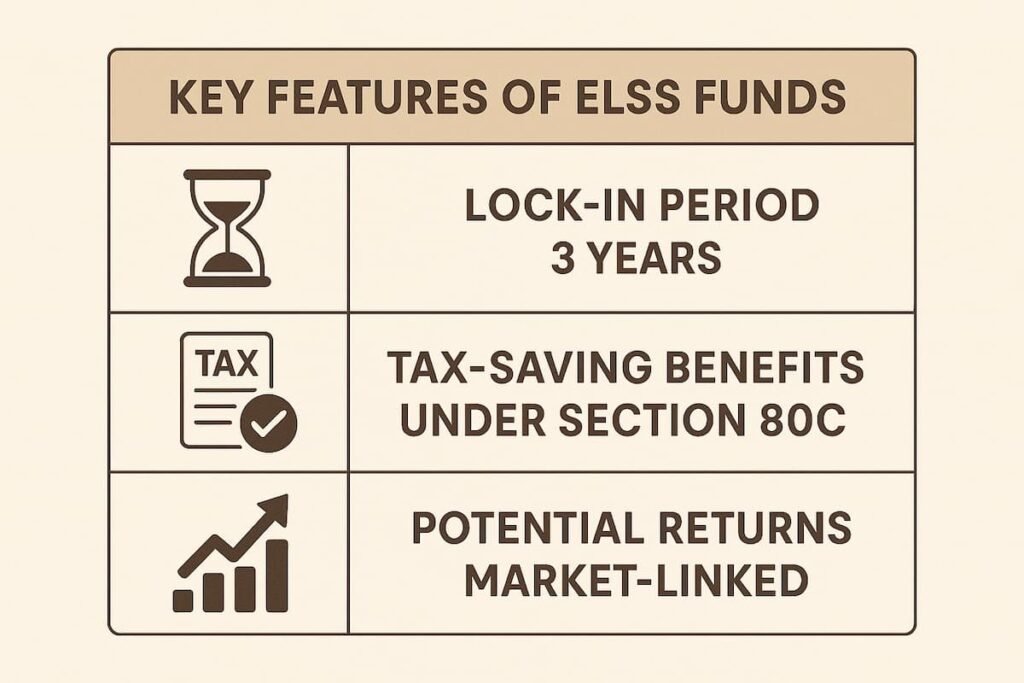
Equity Linked Savings Schemes (ELSS) are tax-saving mutual funds that invest primarily in equities. They come with a 3-year lock-in period and allow investors to claim deductions under Section 80C of the Income Tax Act. ELSS funds are suitable for investors looking to reduce their taxable income while participating in equity market growth.
6. Index Funds
Investment Horizon: Long-term (5+ years)
Risk Level: Low
Suitability: Best suited for passive investors who want to replicate the performance of a market index.
Returns: Index funds offer returns similar to the performance of the index they track, typically between 10% and 12% annually.
Example:
- Nippon India Index Fund – Nifty 50 Plan: Tracks the Nifty 50 Index, providing returns in line with the market.
- UTI Nifty Index Fund: Another option for passive investors looking to follow the performance of the Nifty 50 Index.
Explanation:
Index funds are passive mutual funds that aim to replicate the performance of a specific market index, such as the Nifty 50 or Sensex. These funds generally offer low fees and are ideal for long-term investors who believe in the overall growth of the market but do not want to actively manage their investments.
7. Fund of Funds (FoF)
Investment Horizon: Long-term (5+ years)
Risk Level: Medium
Suitability: Suitable for investors looking for diversification by investing in a mix of other mutual funds.
Returns: FoFs can offer returns similar to hybrid funds, around 8%-12% annually.
Example:
- ICICI Prudential Fund of Funds: A fund that invests in a mix of domestic and international mutual funds for better diversification.
- HDFC Fund of Funds: A diversified fund of funds, providing exposure to different asset classes.
Explanation:
Fund of Funds (FoF) invest in other mutual fund schemes rather than directly in stocks or bonds. This allows investors to benefit from a diverse set of strategies and markets, offering an added layer of diversification. FoFs are suitable for investors who want to spread their risk across multiple funds.
8. International Funds
Investment Horizon: Long-term (5+ years)
Risk Level: High
Suitability: Ideal for investors seeking global exposure and diversification outside the Indian market.
Returns: International funds can offer higher returns based on global market conditions, typically 10%-15% annually.
Example:
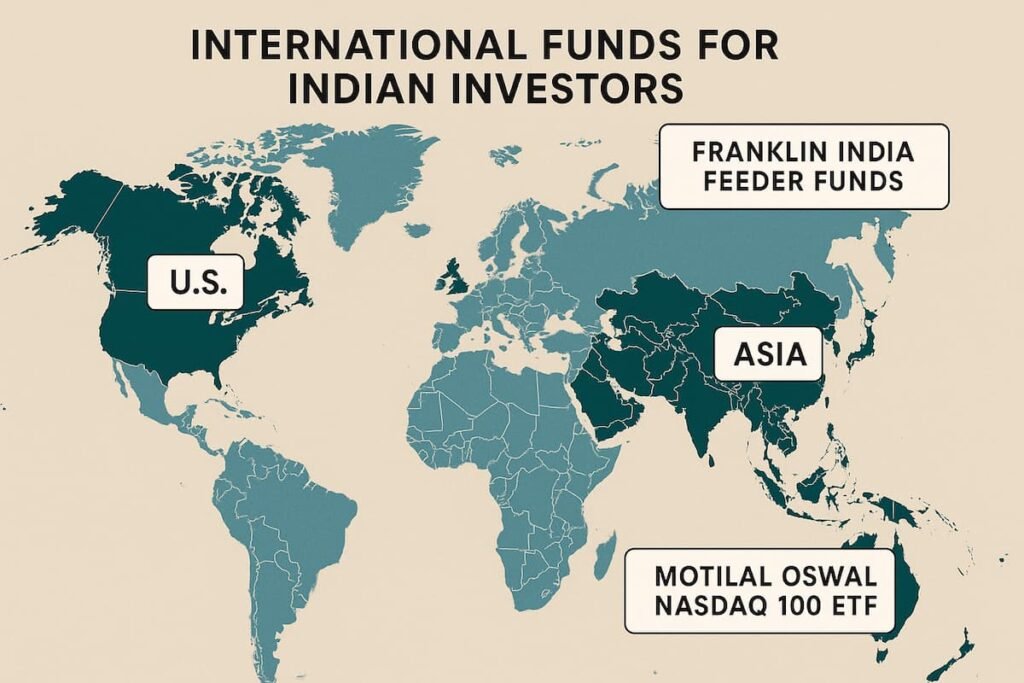
- Franklin India Feeder – Franklin U.S. Opportunities Fund: Invests in U.S. equities, providing exposure to global growth.
- Motilal Oswal Nasdaq 100 ETF: Focuses on investing in the technology-driven U.S. Nasdaq 100 Index.
Explanation:
International mutual funds allow investors to diversify their portfolios by investing in foreign markets. These funds are suitable for investors who are looking to gain exposure to international growth opportunities and reduce country-specific risk.
🧾 Conclusion
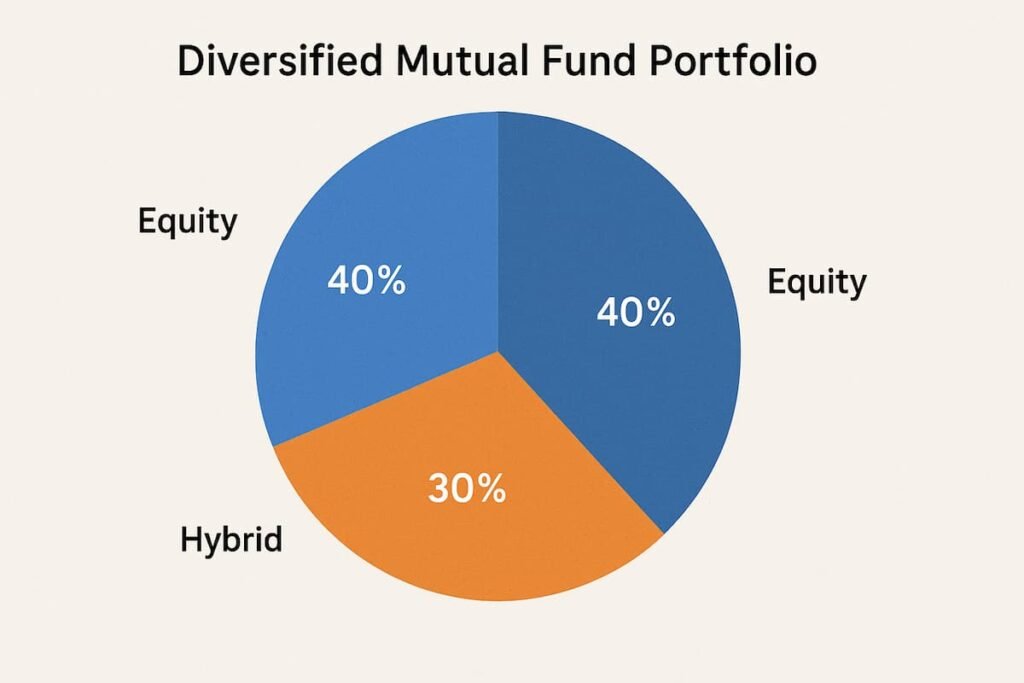
With various types of mutual funds available in India, each catering to different risk appetites and investment goals, it’s essential to choose the one that aligns with your financial objectives. Whether you’re looking for high growth through equity funds or stable income through debt funds, there’s a mutual fund for everyone. Always assess your risk tolerance, investment horizon, and financial goals before making any investment decisions.
By diversifying your portfolio across different fund types, you can mitigate risk and maximize returns in the long run.